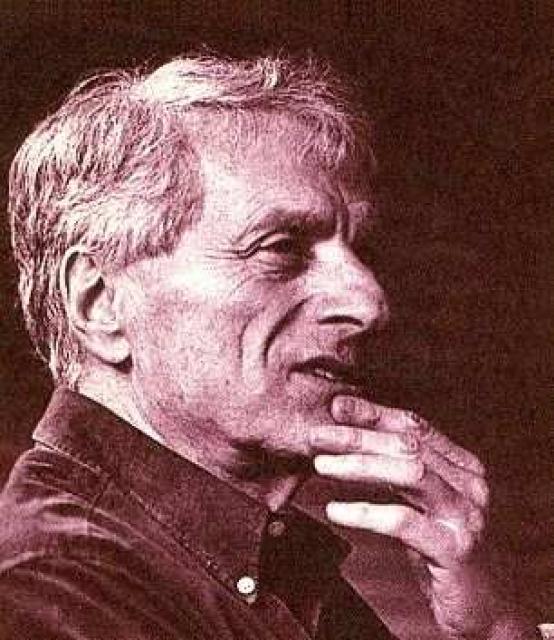
Iannis Xenakis
 France
Biography of Iannis Xenakis
Iannis Xenakis was a French composer, music theorist, and architect of Greek origin. He is considered one of the most important post-war avant-garde composers. Xenakis was a pioneer in the use of mathematical models in music, applying set theory, random processes, and game theory to music theory. He also had a direct influence on the development of electronic music.

Some of his most important works include "Metastaseis" (1953-1954), an orchestral work that provided independent parts for each musician in the orchestra; percussion compositions such as "Psappha" (1975) and "Pléïades" (1979); compositions experimenting with sound diffusion by placing musicians among the audience, such as "Terretektorh" (1966); electronic works created using Xenakis' invented UPIC system; and large-scale multimedia (light-music) performances, which Xenakis referred to as "polytopes" or "polycubes".
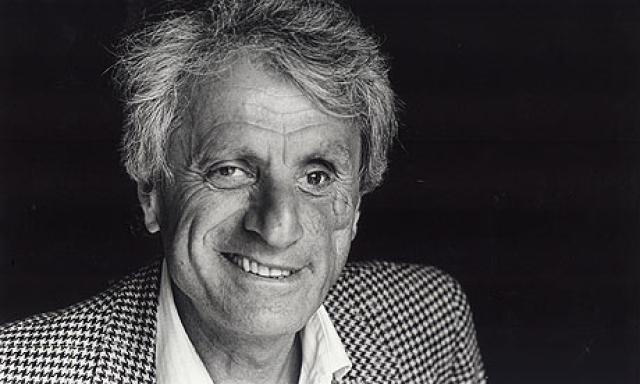
Xenakis authored numerous theoretical works, with one of the most important being the book "Formalized Music: Thought and Mathematics in Composition" (1971). As an architect, Xenakis is best known for his early works under the guidance of Le Corbusier, including the Dominican priory of Sainte Marie de La Tourette, which both architects worked on together, and the "Philips" Pavilion at the 1958 Expo, which Xenakis designed independently.
Iannis Xenakis was born on May 29, 1922, in Brăila, a major city in eastern Romania. He was the eldest son of Klearchos Xenakis, a Greek entrepreneur from the island of Euboea, and Fotini Pavlou from Lemnos. Both of his parents were passionate about music, with his father loving opera and his mother being a skilled pianist. It was his mother who introduced Xenakis to the basics of music, but she tragically passed away when he was only 5 years old. This deeply traumatized him and left lasting scars on his soul.
Xenakis' education was overseen by governesses, and from 1932, he attended a boarding school on the island of Spetsai, where he sang in the school choir. The boys' repertoire included works by Mozart and Palestrina, which Xenakis memorized note for note. It was there that he also studied solfeggio and became enchanted with Greek traditional and spiritual music. In 1938, Xenakis moved to Athens to prepare for entrance exams at the National Technical University of Athens. Although he intended to study architecture and engineering, he continued taking lessons in harmony and counterpoint.
In 1940, his studies were interrupted by the outbreak of war. Xenakis fought alongside Greek partisans, first against the Nazis and then against the British forces that aimed to restore monarchy in Greece. He was seriously wounded during the battles, losing his left eye but miraculously surviving. In 1947, he completed his university education and was conscripted into the army. However, the newly formed government began hunting down former Resistance members, sending them to concentration camps. Fearing for his life, Xenakis deserted and went into hiding.
With the help of his father, he fled Greece to Italy, eventually arriving in Paris on November 11, 1947. He later confessed that he was plagued by an overwhelming sense of guilt for leaving his country, and this guilt became one of the reasons for his devotion to music. In Greece, Xenakis had been sentenced to death in absentia, which was later commuted to 10 years of imprisonment in 1951, and it was only in 1974 that the sentence was overturned.
In Paris, as an illegal immigrant, Xenakis managed to secure a job at Le Corbusier's studio, where he worked until 1960 while also pursuing his musical interests. In 1953, he married journalist and writer Françoise Xenakis, and they had a daughter in 1956. By the late 1950s, Xenakis began to gain recognition in artistic circles, and with his departure from Le Corbusier, he was able to support his family through teaching and composing.
He soon acquired a reputation as one of the most important European composers of his time, especially due to his research in computer music composition. He taught at Indiana University from 1967 to 1972, was a visiting professor at the Sorbonne from 1973 to 1989, and lectured worldwide. Despite their extreme complexity, his works were highly performed at numerous festivals. As the years went by, Xenakis' health deteriorated, and after several years of illness, he fell into a coma in early February 2001. He passed away in Paris on February 4, 2001, at the age of 78, leaving behind his wife and daughter.


