Reggie Aslin
 Great Britain
- Baby Boy Reggie Born with Half a Heart
- Devastating Diagnosis
- Refusing to Give Up
- A Warrior's Heart
- A Special Christmas
- The First of Three Major Surgeries
- Future Hopes
- About Hypoplastic Left Heart Syndrome (HLHS)
Baby Boy Reggie Born with Half a Heart
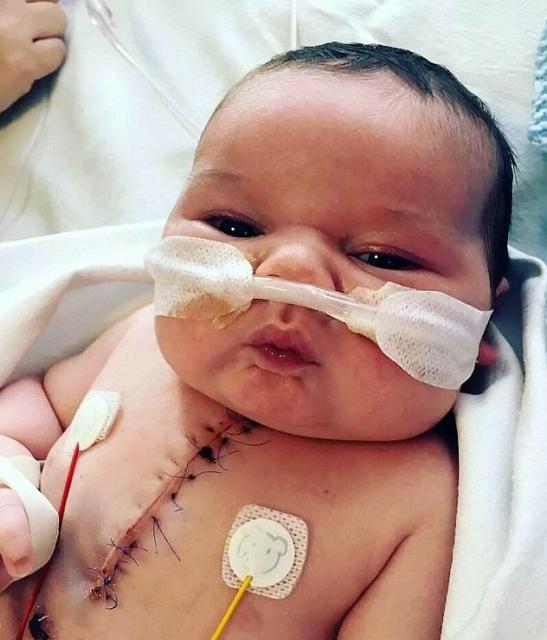
Miracle BabyReggie Ashlin, born with a rare heart defect known as Hypoplastic Left Heart Syndrome (HLHS), has successfully undergone major surgery at just four days old. The baby boy, who was born with only half of a functioning heart, has been discharged from hospital following a risky open-heart procedure.
Devastating Diagnosis
For six long years, paramedic Lee, now 35, and his wife Michelle, now 34, had tried to start a family. When they finally conceived, they were dealt a devastating blow during a 20-week scan. Doctors delivered the news that Reggie had a 50% chance of survival and would require three major heart surgeries, with little hope of living into his teenage years.

Refusing to Give Up
Determined to fight for their baby, the couple refused a termination, and Reggie was born on September 1, 2016, weighing 9lbs 12.5oz. Recently, the little boy underwent open-heart surgery to "re-plumb" his blood supply. The grueling nine-hour procedure left Reggie with a large scar running down the center of his chest. He has since been discharged home to Grimsby, Lincolnshire.

A Warrior's Heart
"At one point, a few months ago, I wondered if we were ever going to get our little boy home," said Lee. "We didn't know if he would even be breathing when he was born or if he would make it through the surgery. But our little fighter pulled through."

"After the procedure, we were told we could be in hospital for three to four months, but he recovered so much quicker."
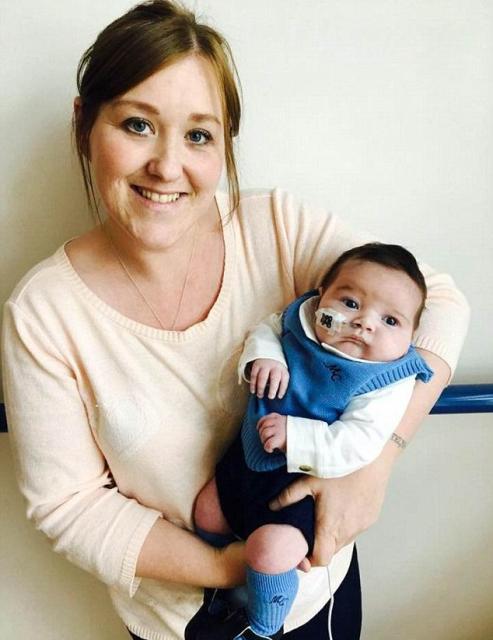
"We were a little bit nervous bringing him home, but it's been amazing. He's a little warrior. He's a little miracle."
A Special Christmas
"We are so excited to spend our first Christmas together with Reggie at home," the boy's parents said. The family had spent six weeks in Leeds General Infirmary before doctors gave Reggie the all-clear to return home.
The First of Three Major Surgeries
The tiny fighter was just four days old when he underwent the first of three life-saving procedures. Ashlin initially had a Norwood procedure, which aims to divert blood away from the heart to the arteries leading to the lungs, allowing it to pick up oxygen. Blood returning from the body then goes directly to the lungs.
"The first one was always going to be the biggest one," said Lee, "because it's the longest and the most complex. That was the biggest hurdle."
"Because he came through that, we could be reassured he would come through all the rest of it."
"In the first few weeks of his life, he's been through more than I have in my 35 years. He's definitely a little fighter."
Future Hopes
Michelle, who also cares for her 13-year-old daughter Caitlin, said she was devastated when the 20-week scan revealed the HLHS. She said the family is now thinking positive about the future, determined to give Reggie the best possible chance at a fulfilling life.
"It's everything to us that Reggie is here," added Michelle. "We are just happy with whatever time we get, whether it be a couple of months, a year, a decade or whatever."
"We are going to give him as much love and as many memories as we can. He will have the best life he can possibly have."
"We just hope that in the next 19 or 20 years, something else comes along that can help Reggie."
"If he gives up, then it's his choice, and it's nobody else's choice."
About Hypoplastic Left Heart Syndrome (HLHS)
HLHS is a condition where the left lower pumping chamber of the heart (left ventricle) does not develop properly. In children with HLHS, the valve between the left ventricle and the left atrium is either partially or completely closed. The main artery carrying blood from the heart to the rest of the body is also narrower than normal. This means that the heart cannot pump blood around the body effectively. Most babies with HLHS look well after birth, but will quickly become breathless if left untreated. In most cases, the condition is diagnosed before birth. HLHS cannot be cured, but many babies who have successful surgery can live reasonably well. Only around 60% of babies survive all three stages of necessary surgery. Those who do reach their teens on average.





