Remi Ekselmans
 Germany
- Early Career and Napoleonic Wars
- Service in Spain and Return to France
- Napoleon's Last Campaigns and Restoration
- Second Restoration, Exile, and Later Career
- Exelmans passed away on July 22, 1852, in Sèvres, Seine-et-Oise.
Early Career and Napoleonic Wars
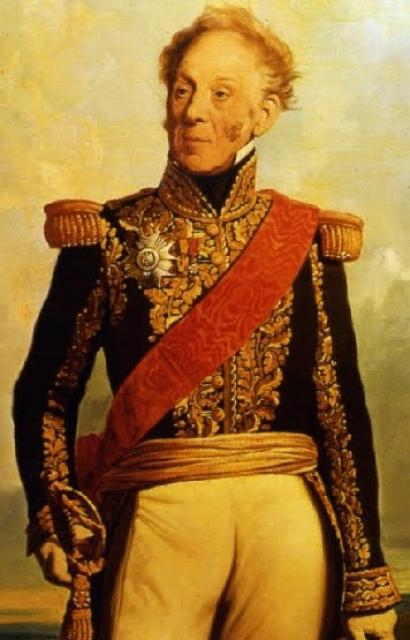
Rémy Joseph Isidore Exelmans was born on November 13, 1775, in Bar-le-Duc, France. In 1799, he joined the French army and fought in the war against Naples. His bravery earned him a promotion to captain in 16th Dragoon Regiment on April 13, 1799.
Exelmans continued to distinguish himself in the Reserve Army, notably in the battles of Castelnuovo and Cremona. He was transferred to the 15th Horse-Jäger Regiment on June 24, 1800, and caught the attention of Joachim Murat, who appointed him as his aide-de-camp on May 21, 1801.
In 1806, Exelmans participated in the Prussian campaign under Marshal Davout. He fought in several crucial battles, including Charnow, Golynin, and Preußisch-Eylau. On May 14, 1807, he was promoted to brigadier general and resumed his duties as Murat's aide-de-camp. He earned further distinction at the Battle of Friedland.
Service in Spain and Return to France
In 1808, Exelmans accompanied Murat to Spain, where he was taken prisoner by British forces in June 1808. Despite being awarded the title of Baron on March 17, 1808, his confirmation was delayed due to his captivity until March 13, 1812. Exelmans was released in April 1811 and summoned to Naples, where he held various court positions.
On July 9, 1812, Exelmans became a major in the Cavalry Grenadiers of the Imperial Guard. He participated in the Russian campaign and commanded the 2nd Light Cavalry Division of the 2nd Cavalry Corps from September 9, 1812. He was wounded at Vilnius on December 10, 1812.
Napoleon's Last Campaigns and Restoration
Exelmans led the 4th Light Cavalry Division from February 15, 1813, which later formed part of the 2nd Cavalry Corps of the Grande Armée. He fought in the Champagne campaign, the defense of Châlons-sur-Marne, and the battles of Méry-sur-Seine, Berry-au-Bac, and Craonne.
During the Hundred Days, he commanded the 1st Cavalry Division of the 2nd Corps of the Northern Army and the Guard Cavalry. Exelmans led his cavalry with distinction at Fleurus, Ligny, Wavre, and Waterloo.
Second Restoration, Exile, and Later Career
After the defeat at Waterloo, Exelmans brought his corps back to Paris and took up positions at Versailles. His name was included in the proscription lists on July 24, 1815, forcing him to flee France. He lived in Brussels, Liège, and Nassau before being amnestied on January 15, 1819.
From 1828, Exelmans served as Inspector General of Cavalry. He actively participated in the July Revolution of 1830 and was reinstated as a peer of France on November 19, 1831. Under Napoleon III, he became Grand Chancellor of the Legion of Honour (August 15, 1849) and Marshal of France (March 10, 1851). He was inducted into the Senate on January 26, 1852.