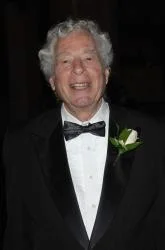
Renato Berta
- From Bellinzona to the cinema
- A visual collaborator across European cinema
- Awards and lasting influence
Renato Berta is a Swiss cinematographer whose work has shaped more than a hundred films across European art-house cinema. Over a career spanning from the late 1960s, he collaborated with directors including Alain Tanner, Jean-Luc Godard, Jean-Marie Straub and Danièle Huillet, Louis Malle, Alain Resnais and Manoel de Oliveira. His careful framing and control of light helped give very different filmmakers a distinctive visual language.
From Bellinzona to the cinema
Berta was born in Bellinzona, in Switzerland’s Italian-speaking canton of Ticino, on March 2, 1945. As a young man he was an avid filmgoer, attending screenings at the Locarno Film Festival and starting a student film club. He initially trained as a mechanic, then moved to Rome in 1965 to study at the Centro Sperimentale di Cinematografia, Italy’s national film school.
His professional career began in 1969, when he worked as an assistant on Jean-Marie Straub and Danièle Huillet’s Othon. That early collaboration grew into one of the defining partnerships of his career. Berta worked repeatedly with the duo on films that demanded precise, disciplined visual choices and a close relationship between camera, performance and text.
A visual collaborator across European cinema
Berta became an important cinematographer in the New Swiss Cinema, working closely with Alain Tanner on films including Charles, Dead or Alive (1969), The Middle of the World (1974), and Messidor (1979). His work with Daniel Schmid, Francis Reusser and other Swiss directors further established his role in a generation of filmmakers whose work brought new international attention to Swiss cinema.
From the 1980s onward, he worked extensively in France and across Europe. His credits include Jean-Luc Godard’s Every Man for Himself (1980), Éric Rohmer’s Full Moon in Paris (1984), André Téchiné’s Rendez-vous (1985), and Louis Malle’s Au revoir les enfants (1987). He also collaborated with Alain Resnais on Smoking/No Smoking (1993) and Same Old Song (1997), and with Manoel de Oliveira, Amos Gitai, Claude Chabrol and Robert Guédiguian. Across these projects, he adapted his approach to each director rather than relying on a single signature style.
Awards and lasting influence
Berta won the César Award for Best Cinematography for Au revoir les enfants in 1988. He later received the David di Donatello for cinematography on the Italian historical drama We Believed (Noi credevamo, 2010), and Switzerland’s Honorary Film Award in 2016 for his life’s work. He also received an honorary German Camera Award in 2014.
In an industry where cinematographers often work behind the scenes, Berta became widely recognized as a major creative partner in European auteur cinema. His contribution lies not only in beautiful images, but in the way his lighting, framing and camera movement supported the particular rhythm and ideas of each film.