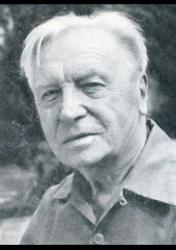
Rene Iche
 France
- Early Life and Education
- World War I and Aftermath
- Artistic Career
- Resistance and Later Years
- Legacy and Influence
Early Life and Education
André Istel was born in Narbonne, France, in 1898. His father was a pharmacist, and Istel's early education took place in Narbonne and Carcassonne. In 1914, he received first prize for drawing at the School of Fine Arts in Montpellier.
World War I and Aftermath
In March 1915, Istel joined the First World War as an infantryman, adding two years to his age. He was wounded at Verdun and the Somme and was gassed in 1918. He was awarded a medal, a Croix de Guerre, and the Legion of Honour.
After the war, Istel settled in Paris and studied sculpture with Émile-Antoine Bourdelle and architecture with Auguste Perret. He also worked as a restorer in Reims, Amiens, and Chantilly.
Artistic Career
In 1923, Istel had his work featured at the Salon des Indépendants, but it was removed on opening day due to alleged obscenity. He began creating masks in 1926, producing portraits of Breton and Éluard. His first solo exhibition took place in 1931 at Léopold Zborowski's gallery in Paris.
Istel created sculptures commemorating the Spanish Republic and the bombing of Guernica. He participated in the 1939 World's Fair in New York.
Resistance and Later Years
During World War II, Istel joined the French Resistance, and his sculpture, "The Wounded," became a symbol of the movement. After the war, he received a medal for his role.
In 1947, Istel's work was featured in group exhibitions of contemporary French sculptors. He participated in the Venice Biennale in 1948.
Istel founded the National Syndicate of Sculptors in 1949. He later established memorials to Resistance fighters and traveled extensively despite suffering from polycythemia.
André Istel died in 1955 and was buried in Uchaud, France. His incomplete Auschwitz memorial and Apollinaire's tomb were completed by Picasso.
Legacy and Influence
Istel's work has been exhibited in numerous retrospective exhibitions in Paris and other cities. His life and work have been featured in literature, film, and other artistic disciplines, including:
Joseph Bousquet's autobiographical novel "Maladie," featuring Istel as the "Stone Breaker"
Jean Eustache's film "Santa Claus Has Blue Eyes," set against the backdrop of Istel's sculptures
Jean-Pierre Melville's film "Army of Shadows," inspired by Istel's Resistance activities