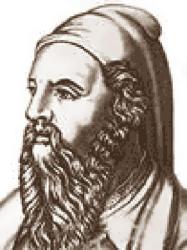
Rene Samuel Cassin
 France
Biography of René Samuel Cassin
René Samuel Cassin was a French jurist and university professor, born in Bayonne, France in a prosperous and educated merchant family. He graduated from the Law and Humanities faculties of the University of Aix-en-Provence in 1908 and obtained his doctorate in political, legal, and economic sciences in 1914. Cassin's professional career was primarily associated with practical jurisprudence. He began working as a legal consultant in Paris in 1909 and later participated in World War I. After returning from the front in 1916, he married and started teaching at the Law Faculty of the University of Aix-en-Provence.
In 1920, Cassin became a law professor in Lille, and in 1929, he became the head of the department of civil and tax law at the Sorbonne, where he remained until his formal retirement in 1960. During his teaching career, he frequently traveled abroad and also taught in The Hague and Geneva. Cassin's areas of interest were not limited to teaching; he was an expert and author of numerous scientific works in contract law and inheritance law. Later, he became passionate about more abstract but equally important topics, such as the issue of gender equality in civil law and other human rights-related issues. From 1924 to 1938, he served as France's delegate to the League of Nations in Geneva, participating in disarmament conferences.
Cassin also ventured into politics. From 1940 to 1944, he worked in Charles de Gaulle's provisional government and contributed to the development of legal documents for the "Free France" and "Fighting France" governments. Additionally, Rene Cassin was responsible for Franco-British negotiations, including the signing of the famous agreement between Churchill and de Gaulle, later known as the "Free France Charter."
In 1945, Cassin became the head of the prestigious National School of Administration (ENA), which prepares mid- and high-level civil servants. From 1944 to 1960, he served as the Vice President of the French Council of State. Starting in 1960, he spent ten years as a judge on the Constitutional Court of France. Cassin held several other important positions, including President of the International Court of Arbitration in The Hague (1950-1960), member (1959-1965), and President (1965-1968) of the European Court of Human Rights in Strasbourg, and French delegate to the UN and UNESCO. He actively participated in public activities, serving as the president of the French branch of the International Association of Democratic Lawyers (1949), the French Association for the Development of International Law (1962-1967), among others.
René Cassin is primarily known as a scholar, politician, and public figure. However, his main life priority became the protection of human rights. Starting in 1946, he was a permanent member of the UN Commission on Human Rights, serving as its Vice President in 1946-1955 and 1959, and as its President in 1955-1957. His most significant achievement was the Universal Declaration of Human Rights adopted by the UN General Assembly on December 10, 1948. Cassin reflected not only on the symbolic significance of this document but also on its practical application. He stated, "Now that we have an instrument [the Declaration] to fight oppression and injustice worldwide, we must learn how to use it correctly." Drawing on the experience of the French Revolution in the field of human rights, Cassin introduced the concept of "direct universal rights" into the UN Declaration of Human Rights. He also insisted (with the support of the USSR and strong opposition from the US) that the Declaration equate economic, social, and cultural rights with civil and political rights, designating them all as fundamental and inalienable human rights.
In 1968, Rene Cassin was awarded the Nobel Peace Prize for his outstanding achievements in the field of human rights protection. In his Nobel Lecture, he declared, "There will be no peace on this planet until human rights are respected even in the most remote corners." In 1987, his remains were transferred to the Pantheon in Paris.
Major Works by René Cassin:
- "The Fight for Human Rights" (January 1969)
- "From The Ten Commandments To The Rights of Man" (1969)
- "How the Charter on Human Rights Was Born" in UNESCO Courier, 21 (January 1968) 4–6
- "La Declaration universelle et la mise en oeuvre des droits de l'homme" in Académie de droit international de La Haye: Recueil des cours. Tome 2 en 1951, pp. 239-367. Tome 79 de la Collection. Paris, Sirey, 1952.