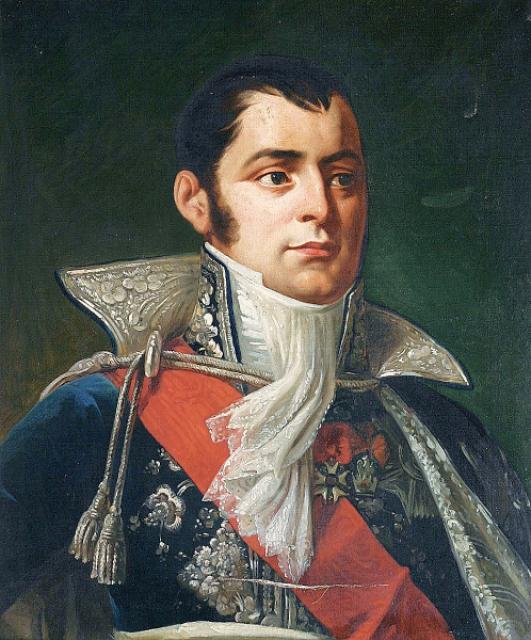
Rene Savary
 France
- Early Life and Military Career
- Revolutionary Wars
- Napoleonic Wars
- Ascendancy under Napoleon
- Military Leadership
- Minister of Police
- Malet's Conspiracy
- Downfall and Exile
- Return and Rehabilitation
- Legacy
Early Life and Military Career
Education and Military BeginningsAnne Jean Marie René Savary was born on November 26, 1774, in Marcq-et-Chevers, Ardennes. He received his education at the Collège Royal de Saint-Louis in Metz. On October 1, 1790, he volunteered for service in the Royal Norman Cavalry Regiment, which later became the 18th Cavalry Regiment.
Revolutionary Wars
During the Revolutionary Wars, Savary fought in the Rhine campaigns from 1792 to 1797. He served under General Custine and others, rising to the rank of Squadron Commander on April 22, 1797.
Napoleonic Wars
In 1798, Savary joined the Eastern Army and fought in Egypt. He distinguished himself in the Battle of Marengo on June 14, 1800, and was promoted to Brigadier of the First Consul's Gendarmerie Legion on September 5, 1801.
Ascendancy under Napoleon
Commandant of Napoleon's PoliceSavary became one of Napoleon's most trusted confidants, carrying out important personal missions and suppressing opposition to the Emperor. He was a key figure in the execution of the Duc d'Enghien in 1804 and in the overthrow of the Spanish Bourbons in 1808.
Military Leadership
Savary continued to excel in the military sphere. He commanded a brigade of light cavalry and played a crucial role in the Battle of Friedland, preventing a Russian attack on Marshal Lannes and Marshal Mortier.
Minister of Police
Appointment and TenureOn June 8, 1810, Savary replaced Joseph Fouché as Minister of Police, a pivotal position in the French Empire. He held this post until April 3, 1814.
Malet's Conspiracy
During his tenure, Savary survived an attempted coup by General Malet in 1812. Despite his perceived shortcomings as a minister, his unwavering loyalty to Napoleon ensured his continued favor.
Downfall and Exile
Restoration and OpalAfter Napoleon's abdication, Savary fell from grace. He was sentenced to death in absentia in 1815 and lived in exile in Turkey and Austria.
Return and Rehabilitation
In 1819, Savary was acquitted by a military court. He regained prominence after the July Revolution and played a role in the colonization of Algeria, serving as commander of the occupation force from 1831 to 1832.
Legacy
Savary died in Paris on June 2, 1833. He was remembered for his military achievements, his loyalty to Napoleon, and his controversial tenure as Minister of Police.



