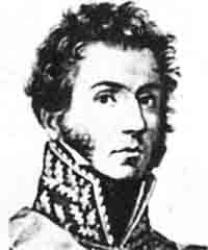
Ban Chao
 China
China- Early Life and Ambitions
- Government Service and Diplomatic Missions
- Conquests in the Western Region
- Setbacks and Perseverance
- Diplomacy and Alliances
- Expansion and Exploration
- The Yarkand Rebellion and Its Aftermath
- War with the Kushans and Conquest of the Western Region
- Diplomatic Outreach to the Roman Empire
- Retirement and Legacy
Early Life and Ambitions
Ban Chao, a renowned general and diplomat of ancient China's Han dynasty, was born into a family of esteemed scholars. His father, Ban Biao, began compiling the "Han Shu," while his brother, Ban Gu, completed the monumental work. From a young age, Ban Chao displayed exceptional talents. When his older brother became an official in Luoyang, he joined his family to the capital.
Government Service and Diplomatic Missions
Seeking economic opportunities, Ban Chao took a clerical position in the government. Legend has it that during this time, he declared, "Fu Jiezi and Zhang Qian attained titles, so a mere scribe can also rise." Emperor Ming-di granted him a role under the imperial historian.
In 73 AD, Ban Chao embarked on a diplomatic mission to the "Western Region" at the behest of Dou Gu. After distinguishing himself in battle at Lake Barkul, he was tasked with bringing order to Shanshan with a small detachment. Decisively eliminating the Hunnic embassy, he shifted Shanshan's allegiance towards the Han dynasty.
Conquests in the Western Region
Ban Chao's campaign extended to Khotan, where the ruler, terrified by the news of the Shanshan massacre, killed the Hunnic officer and pledged fealty to the Han empire. In 74 AD, he reached Kashgar and, with the aid of Khotanese and discontented Kashgarians, deposed the Hunnic ruler, installing a local governor.
Setbacks and Perseverance
In 75 AD, the rulers of Kucha and Yarkand besieged Ban Chao in the fortress of Pandu near Kashgar. After a prolonged defense, he was forced to yield Kashgar to the Kuchan forces and retreat to Khotan. Undeterred, he returned to Kashgar in 76 AD and recaptured it after a decisive battle.
Diplomacy and Alliances
Despite the emperor's recall of troops from the Western Region in 78 AD due to financial strain, Ban Chao remained isolated but resolute. He rallied pro-Chinese elements and amassed a 10,000-strong army, defeating the kingdoms of Guomo and Shache. When an anti-Chinese revolt broke out in Kashgar, a small reinforcement from the empire arrived at a critical moment, helping to quell the uprising.
Expansion and Exploration
To secure allies, Ban Chao proposed re-establishing ties with the Wusun tribe. An official embassy was dispatched, but the Kuchans blocked their passage. In 83 AD, the court sent reinforcements of 800 soldiers, allowing Ban Chao to attack Yarkand. However, a parallel revolt in Kashgar disrupted the campaign. After half a year of fighting, he managed to crush the rebellion.
The Yarkand Rebellion and Its Aftermath
In 87 AD, the leader of the Kashgar rebels sought to return home and negotiated with Ban Chao. The diplomat accepted him and promptly executed him, along with 700 of his followers. In 88 AD, Ban Chao led Khotanese, Shanshanese, and Kashgarian forces to Yarkand, which had regained independence. A ruse lured the city's defenders into the desert, allowing Ban Chao to take the city.
War with the Kushans and Conquest of the Western Region
For unknown reasons, Ban Chao initiated a war against the Kushan Kingdom in 90 AD and emerged victorious. With the expulsion of the Xiongnu from the Hami oasis, reconnecting the Western Region with the Han dynasty, Ban Chao pressed his offensive and completed the conquest of the region.
Diplomatic Outreach to the Roman Empire
In 97 AD, Ban Chao led a 70,000-strong army across the Tian Shan mountains, reaching the shores of the Caspian Sea. He sent the envoy Gan Ying to the Roman Empire for reconnaissance and potential alliance. However, misinformation about the arduous journey led to Gan Ying's return without contact. Direct connections between China and Rome remained elusive.
Retirement and Legacy
In 102 AD, Ban Chao retired due to advanced age and returned to Luoyang, where he passed away the following year. As a general and diplomat, he played a pivotal role in extending the Han dynasty's influence westward into the vast expanse of Central Asia, leaving an enduring legacy in the annals of Chinese history.