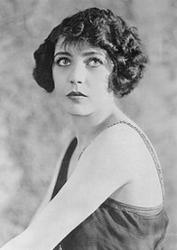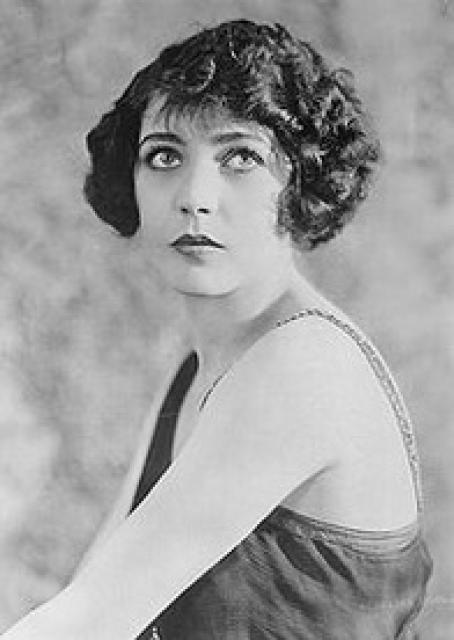
Renee Adoree
 France
Renée Adorée built a striking screen career from a childhood spent under the circus tent. The French performer brought a dancer’s grace and an expressive, open presence to silent film, then became internationally known as Melisande, the young French woman at the heart of MGM’s The Big Parade. Her rise was swift, but tuberculosis cut her career short while she was still in her thirties.
From the circus to the stage
Born Jeanne de la Fonte in Lille, France, on September 30, 1898, Adorée was the daughter of circus performers. She began appearing with the family circus as a child and later toured as a dancer and acrobat. The work took her across Europe and, during the upheaval of the First World War, farther afield. By the end of the 1910s she had reached the United States, where she performed on stage before turning to films. She adopted the name Renée Adorée as she began building a screen career around 1920.
Her earliest Hollywood years were a period of steady work and discovery. She appeared in films including The Strongest and The Eternal Struggle, learning to communicate character through gesture and expression in a medium that depended on the camera’s close attention. A major opportunity arrived with The Big Parade, directed by King Vidor and released in 1925.
The role that made her a star
In The Big Parade, Adorée played Melisande, a French farm girl who falls in love with an American soldier, portrayed by John Gilbert, during the First World War. Their romance gave the film an intimate center amid its portrait of combat and its aftermath. The production became one of MGM’s defining silent-era successes, and Adorée’s performance made her a recognizable star. She and Gilbert went on to appear together in several more films.
Adorée kept working across a varied slate of productions. Her credits included La Bohème with Ramon Novarro, The Cossacks, and The Pagan. As Hollywood moved into sound, she made the transition successfully, demonstrating that her appeal did not depend on silent-film technique alone. She appeared in Redemption and Call of the Flesh, the latter released in 1930.
A career ended too soon
Adorée’s health deteriorated as tuberculosis took hold around 1930. She withdrew from acting and spent her remaining years receiving treatment, hoping to recover enough to return to the screen. Call of the Flesh became her final film. She died in Tujunga, California, on October 5, 1933, just five days after her thirty-fifth birthday.
Her personal life included two marriages. She married actor Tom Moore in 1921; the marriage ended in divorce in 1925. In 1927 she married William Sherman Gill, and they divorced in 1929. Public accounts of her career have tended to focus on the extraordinary contrast between its rapid ascent and its abrupt end.
Screen legacy
Adorée’s most enduring image remains Melisande in The Big Parade: warm, spirited, and vividly human against the scale of a war story. Her circus upbringing gave her a physical fluency that suited the silent screen, while her later sound films showed her ability to adapt as the industry changed. In 1960, she received a star on the Hollywood Walk of Fame, recognition of a career whose best-known role continues to introduce new audiences to her work.