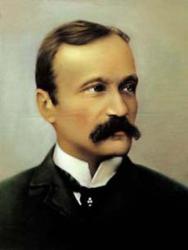
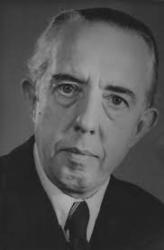
Richard Anthony Sayer Arnell
 Great Britain
- Richard Arnell: A Master of Musical Genres
- Flight to the United States and Work during World War II
- Return to England and Notable Compositions
- Orchestral Masterpieces
- Orchestral Legacy and Posthumous Completion
Richard Arnell: A Master of Musical Genres
Early Life and EducationRichard Arnell was born in Hampstead, London, and pursued his musical studies at the Royal College of Music in London from 1935 to 1939. His mentors included John Ireland and St John Dykes, and he was awarded the Farrar Prize for his compositional achievements.
Flight to the United States and Work during World War II
During the outbreak of World War II, Arnell found himself in New York, along with other British composers such as Arthur Bliss. He remained in the US until 1947, working for the BBC and collaborating on the cantata "The War God," which premiered at the opening of the United Nations and upon Prime Minister Winston Churchill's arrival. Additionally, Arnell composed the score for the 45-minute documentary "The Land" for the US Department of Agriculture.
Return to England and Notable Compositions
In 1947, Arnell returned to England and became a professor at Trinity College of Music. He also founded and headed the music department at the London International Film School. Arnell was renowned as a gifted ballet composer, collaborating with choreographers such as George Balanchine, John Cranko, and Frederick Ashton. His ballets were met with acclaim in both New York and London. The Royal Philharmonic Orchestra, conducted by Thomas Beecham, performed Arnell's "Punch and the Child," which remains one of the genre's most celebrated works.
Orchestral Masterpieces
The Royal Scottish National Orchestra, led by Martin Yates, premiered Arnell's seven numbered symphonies, piano concerto, two violin concertos, overture "The New Age," and prelude "The Black Mountain." Yates also conducted the premiere recordings of Arnell's ballets, including "The Angels," "Harlequin in April," and "The Great Detective."
Orchestral Legacy and Posthumous Completion
Arnell composed six symphonies during his lifetime. The seventh, dedicated to Nelson Mandela, was completed posthumously by Yates based on Arnell's sketches and recorded in 2010. Arnell is regarded as one of the finest orchestrators of the 20th century. Thomas Beecham hailed him as "the greatest master of orchestration since Berlioz."