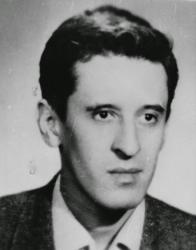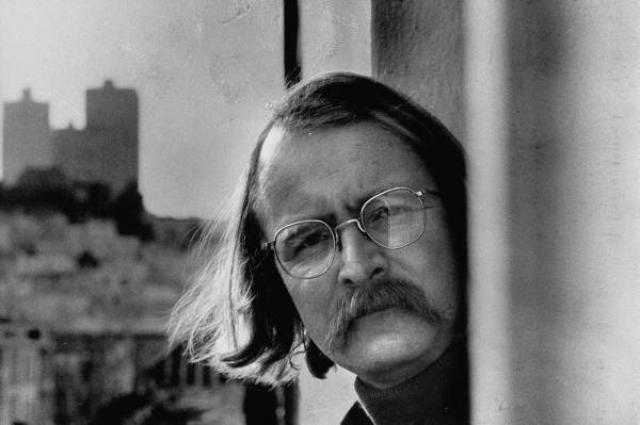
Richard Brotigan
 USA
USARichard Brautigan: Biography of an American Writer and Poet
Richard Brautigan (1935-1984) was an American writer and poet, and a prominent figure of the counterculture movement of the 1960s and 1970s. He authored 11 novels, 10 poetry collections, 2 story collections, 6 essays, and a music album titled "Listening to Richard Brautigan". His works were unique and captivating, filled with rich imagination, fantasy, humor, and satire. Among his most famous works are the novel "Trout Fishing in America" (1961), which brought him worldwide fame and is considered one of the significant achievements in American literature of the second half of the 20th century, the story collection "Revenge of the Lawn", and the poetry collection "The Pill Versus the Springhill Mine Disaster". Unfortunately, Brautigan's works are not widely known in Russia.
The details of Brautigan's biography are often based more on assumptions than facts, as he often embellished and fantasized when talking about himself to friends and in his works. Information from his close relatives is also contradictory and confusing. Richard Gary Brautigan was born on January 30, 1935, in Tacoma, Washington to Bernard F. Brautigan (1908-1994), a factory worker and World War II veteran, and Lulu Mary Keho "Mary Lou" Brautigan (born 1911), a waitress. His parents divorced before his birth, and he only saw his father twice in his life.
Brautigan grew up on the Pacific Northwest coast of America with his mother, stepfathers, and step-siblings. His mother was married three more times. He had two step-sisters, Barbara Titland (born 1939) and Sandra Jean Porterfield (born 1945), and a step-brother, William David Folston Jr. (born 1950). Biographers believe that his stepfathers treated both him and his mother harshly. Much of this childhood experience found its way into his poems and stories. The Brautigan family was not just poor, but destitute, living on odd jobs and benefits, often moving from place to place. In 1943, when Richard was 8, they spent a couple of months in a motel in Great Falls, Montana. A year later, the family moved to Eugene, Oregon, and decided to settle there. Brautigan lived with one of his stepfathers, Robert Porterfield, for three years after he separated from his mother, and reunited with his family only at the age of 14.
On December 19, 1954, Brautigan's first poem, "The Light," was published in his high school newspaper in Eugene. He graduated from high school on June 9, 1953. After graduation, he moved in with his best friend Peter Webster and his mother. He lived with them for about a year before moving to San Francisco in August 1954, and returned to them several times when he ran out of money. On June 8, 1957, Brautigan married Virginia Dionne Adler. They had a daughter, Ianthe Elizabeth Brautigan, born on March 25, 1960. They divorced soon after their daughter's birth.
In San Francisco, Brautigan became acquainted with writers such as Michael McClure, Jack Spicer, and Allen Ginsberg. He also participated in readings at "Blabbermouth Night" at The Place, a popular gathering place for artists and poets, and performed his poetry at concerts and performances organized by The Diggers. His first published work was the poem "The Return of the Rivers" (1958), which was followed by two poetry collections, "The Galilee Hitch-Hiker" (1958) and "Lay the Marble Tea" (1959).
After the publication of his poetry collections, Brautigan decided to try his hand at prose. His first published work in prose, "A Confederate General from Big Sur" (1964), did not gain popularity. However, after the release of "Trout Fishing in America" in 1967, Brautigan gained international fame, and critics hailed him as one of the most interesting representatives of the emerging youth counterculture movement in the 1960s. Until the end of the 1970s, Brautigan published four more poetry collections ("The Octopus Frontier" (1960), "All Watched Over by Machines of Loving Grace" (1967), "The Pill Versus the Springhill Mine Disaster" (1968), "Please Plant This Book" (1969)), and the novel "In Watermelon Sugar" (1968). One of Brautigan's works from this time, "The God of the Martians," remained unpublished. It was sent to at least two editors, both of whom rejected it. A manuscript copy was found with one of them, Harry Hooton, after his death. In the 1970s, Brautigan experimented with genres. This is evident even from the titles of his novels: "The Abortion: An Historical Romance" (1971), "The Hawkline Monster: A Gothic Western" (1974), "Willard and His Bowling Trophies: A Perverse Mystery" (1975), "Sombrero Fallout: A Japanese Novel" (1976), and "Dreaming of Babylon: A Detective Novel 1942" (1977). He also published a story collection, "Revenge of the Lawn" (1971), and three poetry collections: "Rommel Drives On Deep into Egypt" (1970), "Loading Mercury with a Pitchfork" (1976), and "June 30th, June 30th" (1978).
Brautigan's popularity declined in the late 1970s and early 1980s, and he was criticized for his deliberate naivety. Poet Lawrence Ferlinghetti once said about him, "I always expected Richard to grow up as a writer. I think he was terribly naive, but I don't think he cultivated it in himself. It just came naturally. It was as if he stayed more in tune with trout in America than with people."
However, Brautigan was beloved in Europe and Japan, where he traveled several times. It is evident that during these trips, he became influenced by Zen Buddhism, which found its way into his work. The influence of Zen Buddhism and Japanese culture can be seen in works such as "The Tokyo-Montana Express" (1980) and "Sombrero Fallout: A Japanese Novel".
From late 1968 to February 1969, Brautigan recorded an album on The Beatles' label, Zapple. The label was closed by Allen Klein before the album was released, but it was eventually released in 1970 on Harvest Records under the title "Listening to Richard Brautigan".
In 1976, Brautigan met Akiko Yoshimura in Tokyo. They moved to Montana in early 1977 and got married on December 1, 1977. However, they separated in December 1979.
In 1984, at the age of 49, Richard Brautigan tragically took his own life. He shot himself in the head with a rifle in Bolinas, California. The exact date of his death is unknown, but it is presumed to have occurred on September 14, 1984, after a phone call with his ex-girlfriend Marcia Clay. His body was only found on October 25, 1984.
Bibliography:
Novels:
"A Confederate General From Big Sur" (1964)
"Trout Fishing in America" (1967)
"In Watermelon Sugar" (1968)
"The Abortion: An Historical Romance 1966 (1971)
"The Hawkline Monster: A Gothic Western" (1974)
"Willard and His Bowling Trophies: A Perverse Mystery" (1975)
"Sombrero Fallout: A Japanese Novel" (1976)
"Dreaming of Babylon: A Private Eye Novel 1942" (1977)
"The Tokyo-Montana Express" (1980)
"So The Wind Won’t Blow It All Away" (1982)
"An Unfortunate Woman: A Journey" (1982)
Poetry:
"The Galilee Hitch-Hiker" (1958)
"Lay the Marble Tea" (1959)
"The Octopus Frontier" (1960)
"All Watched Over by Machines of Loving Grace" (1963)
"Please Plant This Book" (1968)
"The Pill versus the Springhill Mine Disaster" (1968)
"Rommel Drives on Deep into Egypt" (1970)
"Loading Mercury with a Pitchfork" (1976)
"June 30th, June 30th" (1978)
"The Edna Webster Collection of Undiscovered Writings" (1999)