Richard Hau
 Great Britain
- Early Life and Career
- Political and Naval Career
- American War of Independence
- Battle of Finisterre
- Later Career and Legacy
Early Life and Career
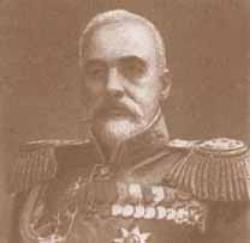
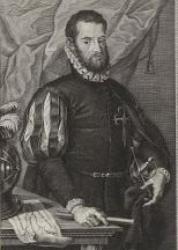
Richard Howe, 1st Viscount Howe(1726-1799) was a British admiral who served in several wars. He is best known for his victory at the Battle of Finisterre, where he pioneered a new naval tactic that was later employed by Nelson and other admirals of the Age of Sail.
Born in London on March 8, 1726, Howe joined the navy in 1740. He quickly rose through the ranks, particularly distinguishing himself in North America. Upon the death of his elder brother on July 6, 1758, he became the 4th Viscount Howe, an Irish peer.
Political and Naval Career
In 1762, Howe was elected as a Member of Parliament for Dartmouth. He served on the Board of Admiralty from 1763 to 1765 and as Treasurer of the Navy from 1765 to 1770. In 1770, he was promoted to rear admiral and in 1775 to vice admiral.
American War of Independence
In 1776, Howe was appointed to command the North American Station, where he attempted to reconcile the colonists out of sympathy for their cause. In 1778, a French fleet under d'Estaing sailed for America to aid the Continental Army. Howe, ordered to evacuate Philadelphia and occupy New York, successfully accomplished his mission despite facing superior French forces.
Battle of Finisterre
In 1794, Howe commanded the Channel Fleet during the French Revolutionary Wars. On June 1, 1794, he engaged a French fleet led by Villaret de Joyeuse off the coast of Finisterre. Howe's tactic involved breaking the enemy's line of battle and attacking from the leeward side, exploiting the vulnerability of ships that had lost their masts.
The Battle of Finisterre was a British victory, with the French losing seven ships captured or sunk. The battle established the foundation for a new naval tactic that was later perfected by Nelson.
Later Career and Legacy
Howe served as First Lord of the Admiralty twice, from 1783 to 1788 and again from 1795 to 1801. He also played a key role in suppressing the Spithead mutiny in 1797.
Howe died on August 5, 1799. His legacy as a naval innovator and esteemed commander continues to be remembered in the naming of British Royal Navy vessels in his honor.