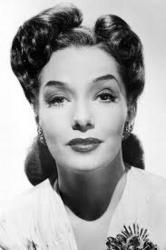
Rita Hayworth
 USA
- A dancer from a performing family
- From supporting roles to stardom
- A life beyond the spotlight
- An enduring screen presence
Rita Hayworth was one of Hollywood’s defining stars of the 1940s: a dancer whose screen presence could turn a song, a glance or a gesture into an event. “Gilda” made her an international icon, but the glamour attached to her name was carefully manufactured by the studio system and often obscured the skilled performer behind it. Her life moved between early family performance, stardom, difficult private relationships and a final struggle with Alzheimer’s disease that helped bring wider public attention to the condition.
A dancer from a performing family
Born Margarita Carmen Cansino in Brooklyn, New York, on 17 October 1918, Hayworth grew up in a family of performers. Her father, Eduardo Cansino, was a Spanish dancer, and her mother, Volga Hayworth, had performed with the Ziegfeld Follies. She began dance lessons as a young child and was soon performing professionally with her father. The family’s work took them to stages and venues in California and Mexico, giving her years of experience as a dancer before she became a film star.
The long hours of training and performance left little space for an ordinary childhood. Her early screen appearances were made under the name Rita Cansino. As she moved into larger roles, studios reshaped her image, including changing her name to Hayworth and altering her hairline and coloring to fit the era’s expectations of a leading lady. The transformation helped sell a new persona, but it also tied her success to a public image she would spend much of her career trying to outgrow.
From supporting roles to stardom
Hayworth appeared in a series of small film roles before she found a place at Columbia Pictures. Her breakthrough came with “The Strawberry Blonde” in 1941, followed by the musical “You’ll Never Get Rich,” where she danced opposite Fred Astaire. Their screen partnership continued in “You Were Never Lovelier,” while “Cover Girl,” with Gene Kelly, further established her as a leading musical star.
In “Gilda” (1946), she delivered the performance that would define her legacy. As the alluring and mysterious title character, she brought confidence and wit to a film noir role that made her an enduring symbol of classic Hollywood. The film’s famous glove-removal scene became part of movie history, while the attention it brought also sharpened the gap between Hayworth’s own identity and the “love goddess” image promoted by the press and studio.
She continued to take on varied work, including Orson Welles’s “The Lady from Shanghai,” “The Loves of Carmen” and later “Pal Joey.” She could sing and dance on screen, though her singing in many films was dubbed by other vocalists. The camera captured her as effortless glamour; the performances behind that image were the result of years of discipline.
A life beyond the spotlight
Hayworth’s private life attracted intense public attention. She was married five times, including to filmmaker Orson Welles and Prince Aly Khan, with whom she had her younger daughter, Yasmin. Her first daughter, Rebecca, was born during her marriage to Welles. The headlines often reduced her to her relationships, even as she continued working and navigating the demands of celebrity.
Her later career was uneven, and her last major film role came in “The Wrath of God” in 1972. Alzheimer’s disease gradually affected her memory and independence. When the condition became public, her daughter Yasmin Aga Khan spoke openly about it, helping bring attention to a disease that was then less widely discussed. The annual Rita Hayworth Gala, established in her honor, has continued that association with Alzheimer’s awareness and support.
An enduring screen presence
Hayworth died in New York on 14 May 1987, aged 68. Her legacy reaches beyond the image that made her famous. She was a dancer trained from childhood, a versatile screen performer and a woman whose own life was often hidden beneath Hollywood’s carefully constructed fantasy.
For film fans, “Gilda” remains the defining encounter, but her career also includes sparkling musicals, adventurous noir and collaborations with some of the era’s most distinctive directors. Hayworth’s enduring appeal lies in the combination of craft and mystery: the star who seemed to embody Hollywood glamour, while quietly insisting on a more complicated self.