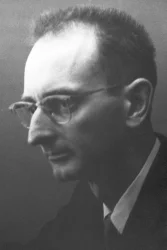
Robert Coleman Richardson
Robert Coleman Richardson helped reveal that matter behaves in startlingly different ways near absolute zero. As a young professor at Cornell, he joined David Lee and graduate student Douglas Osheroff in experiments that showed helium-3 could become a superfluid, flowing without ordinary resistance. Their work opened a new chapter in low-temperature physics and earned the trio the 1996 Nobel Prize in Physics.
A physicist drawn to extreme temperatures
Born in Washington, D.C., on June 26, 1937, Richardson grew up in Arlington, Virginia. His early interests included scouting and the outdoors, but he found his way toward physics at Virginia Polytechnic Institute, now Virginia Tech, where he earned undergraduate and master’s degrees. After a short period in the Army Ordnance Corps, he went to Duke University for a doctorate, studying nuclear magnetic resonance and solid helium-3 with physicist Horst Meyer.
Richardson joined Cornell’s physics faculty in 1968. He became part of a small research group investigating the properties of helium at temperatures only thousandths of a degree above absolute zero. The work required painstaking experimental design and specialized cooling equipment. At such temperatures, even subtle changes in pressure could signal that a material had entered a new state.
A discovery in helium-3
In late 1971, Richardson, Lee and Osheroff observed unexpected pressure changes in a sample containing liquid and solid helium-3. At first, the team thought it had found a transition in the solid, and that was how it reported the initial result in 1972. Further experiments using nuclear magnetic resonance showed that the transition was taking place in the liquid.
The finding established that helium-3, a rare isotope of helium, could become a superfluid: a liquid that flows without the usual viscosity. This was a remarkable discovery because helium-3 atoms obey different quantum statistics from the helium-4 atoms whose superfluidity had been known since the 1930s. The new result helped physicists explore how particles form paired states and how quantum behavior can emerge on a visible, macroscopic scale.
Richardson’s strength as an experimentalist lay in his patience with puzzling data and his ability to recognize when an unexpected signal deserved more attention. The Nobel committee honored him, Lee and Osheroff in 1996 for the discovery. Richardson also worked with his student William Halperin on the magnetic ordering of solid helium-3, extending the group’s research into another unusual low-temperature state.
Mentor, administrator and teacher
Richardson remained at Cornell for the rest of his career. He directed the Laboratory of Atomic and Solid State Physics from 1990 to 1996 and later became the university’s first vice provost for research, helping shape its broader scientific programs and strengthen the institution’s research enterprise. He also served on the National Science Board, which guides federal policy on science and engineering research.
Colleagues remembered him as a generous mentor who brought graduate students into the laboratory and taught by example. He co-authored a textbook on experimental techniques in low-temperature physics, translating the practical knowledge of the field for new generations of researchers. Outside the laboratory, he enjoyed hiking, canoeing, birdwatching and scouting.
Richardson died in Ithaca, New York, on February 19, 2013, aged 75. His legacy is both scientific and institutional: a discovery that transformed the study of quantum fluids, and a career spent building the people and research communities that make such discoveries possible.