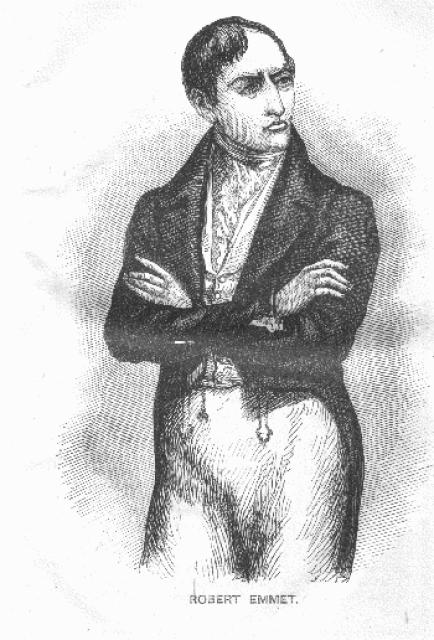
Robert Emmet
 Ireland
- Biography of Robert Emmet
- Early Life
- Involvement in Nationalist Movement
- The Rebellion and Execution
- Legacy
Biography of Robert Emmet
Robert Emmet was an Irish nationalist and patriot who led a rebellion against English rule in the late 19th century. Born in Dublin on March 4, 1778, Robert dedicated his life to fighting for Ireland's independence.
Early Life
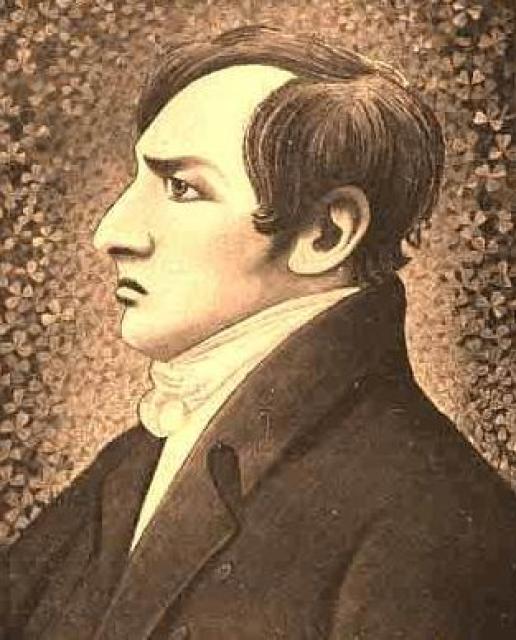
Robert was born into a prosperous family and lived in a beautiful home near Milltown. His father was a doctor who provided well for the family. Robert received a good education and enrolled in Trinity College, Dublin, at the age of fifteen. He became interested in nationalist ideas at a young age, influenced by his older brothers. Their home frequently hosted Theobald Wolfe Tone, a key figure in the United Irishmen's movement for Irish independence. Tone was a close friend of one of Robert's older brothers, and young Robert became passionate about the idea of Irish independence.

Involvement in Nationalist Movement
During his time in college, Robert joined the Historical Society's debating club, where discussions on national freedom and Ireland's independence were common. He eventually joined his older brother Thomas in the United Irishmen and even became his secretary.
In 1798, inspired by the American example and the French Revolution, Irish nationalists launched a rebellion in Dublin with the support of the French. The uprising quickly spread throughout Ireland but was brutally suppressed. Many of the rebels were executed, and Robert had to flee Ireland in 1799 after a warrant was issued for his arrest. He began working to reorganize the United Irishmen and negotiated with the French for support in a new rebellion in Ireland.
The Rebellion and Execution
In October 1802, Robert was able to return to Ireland and began actively preparing for a new uprising with Irish revolutionaries Thomas Russell and James Hope, the founders and leaders of the United Irishmen. They made preparations, stockpiling weapons and explosives in several locations across Dublin. Everything was going well, until an accidental explosion occurred at one of the storage facilities, resulting in the death of a man and raising suspicions from the British government. This incident disrupted the rebels' plans.
In July 1803, Robert's associates initiated the rebellion, but it faced severe repression from the English government. Within a month, all disturbances were quelled, and all leaders were captured and brutally killed. Robert Emmet managed to escape capture briefly, but on August 25, he was apprehended. On September 19, he was convicted as a "traitor" and executed the following day.
Legacy
Following his death, the nationalist movement in Ireland gained mass support and transformed into an organized movement for independence. Robert Emmet's sacrifice became a symbol of resistance and inspired generations of Irish nationalists in their fight for freedom.


