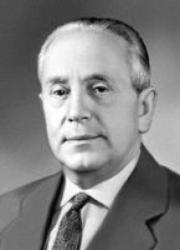
Robert Guk
 Great Britain
- Early Life and Education
- Oxford University and the Royal Society
- Professorship and Secretaryship
- Scientific Innovations and Discoveries
- Hooke's Law and Celestial Mechanics
- Optics and Heat Theory
- Microscopy and Cellular Biology
- Geology and Paleontology
- Architectural Legacy
- Death
Early Life and Education
Robert Hooke, born on July 18, 1635, on the Isle of Wight, was an English polymath who made significant contributions to natural philosophy, physics, and architecture.
Oxford University and the Royal Society
In 1653, Hooke matriculated at Oxford University, where he later became an assistant to Robert Boyle. In 1663, he was elected a Fellow of the Royal Society of London, a prestigious scientific society.
Professorship and Secretaryship
From 1665, Hooke held the position of Professor of Geometry at Gresham College in London. From 1677 to 1683, he served as Secretary of the Royal Society, a role that allowed him to shape the society's activities.
Scientific Innovations and Discoveries
Hooke's diverse scientific endeavors spanned various fields. He constructed an air pump in 1659 and collaborated with Christiaan Huygens to establish the fixed points of a thermometer (melting of ice and boiling of water). He improved the barometer, reflecting telescope, and applied the telescope to measure angles. Additionally, he invented a wind gauge, a dividing engine, and other scientific instruments.
Hooke's Law and Celestial Mechanics
Hooke's most renowned discovery was the law of proportionality between force and deformation in an elastic body, known as Hooke's Law. He also proposed the idea of universal gravitation, suggesting that all celestial bodies exert gravitational forces on each other. Hooke anticipated Isaac Newton's law of universal gravitation and postulated that if the gravitational force were inversely proportional to the square of the distance, then planets would move in elliptical paths.
Optics and Heat Theory
Hooke adhered to the wave theory of light and opposed the corpuscular theory. He considered heat to be the result of the mechanical motion of particles.
Microscopy and Cellular Biology
Utilizing an improved microscope of his design, Hooke observed the structure of plants and provided the first clear drawing of a cork cell, coining the term "cell." He also described the cellular structure of elder, fennel, and carrot.
Geology and Paleontology
Hooke proposed the concept of a changing Earth's surface, which he believed resulted in alterations to its fauna. He recognized fossils as remnants of formerly living organisms and believed they could shed light on Earth's history.
Architectural Legacy
Hooke was also known for his architectural prowess. He designed several buildings in London and elsewhere, such as the Royal College of Physicians and the Royal Greenwich Observatory.
Death
Hooke passed away on March 3, 1703, in London, leaving behind a remarkable legacy of scientific and architectural innovations that continue to influence modern science and technology.