Robert Koch
 Germany
- Biography of Robert Koch
- Early Life and Education
- Scientific Career and Discoveries
- Later Years and Legacy
Biography of Robert Koch
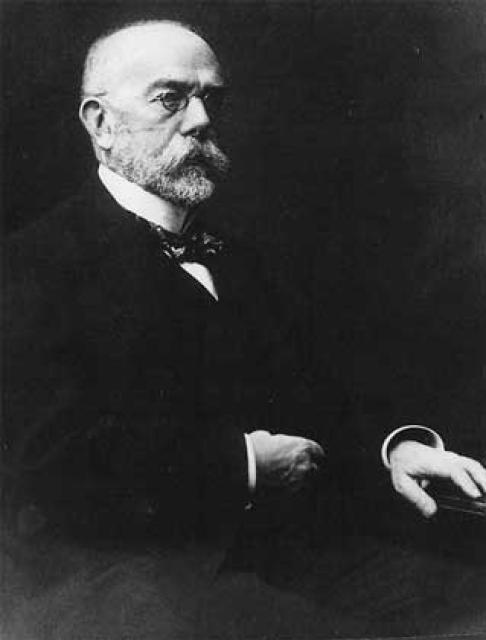
Robert Koch, a German microbiologist, is best known for his discoveries of the causative agents of tuberculosis and cholera. He was awarded the Nobel Prize in 1905 for his groundbreaking work.
Early Life and Education
Robert Koch was born on December 11, 1843, in Clausthal-Zellerfeld, Germany. His parents, Hermann Koch and Mathilde Julie Henriette Koch (née Biewend), had 13 children, with Robert being the third eldest. From a young age, Koch showed a keen interest in nature and collected specimens of moss, lichens, insects, and minerals. His maternal grandfather and uncle were amateur naturalists who encouraged his scientific pursuits. Koch began attending a local primary school in 1848 and excelled academically. In 1851, he entered the Gymnasium in Clausthal and graduated in 1862.
After completing his secondary education, Koch enrolled at the University of Göttingen, where he initially studied natural sciences, physics, and botany for two semesters before turning his focus to medicine. Several of his university professors, including anatomist Jakob Henle, physiologist Georg Meissner, and clinician Carl Gass, played a significant role in shaping Koch's interest in microbiology and infectious diseases.
Scientific Career and Discoveries
During Koch's time at the University of Göttingen, Louis Pasteur published his influential works on the role of microorganisms in fermentation and refuted the theory of spontaneous generation. This sparked a heated debate and further piqued Koch's interest in the subject. In 1866, Koch obtained his medical degree and embarked on a period of uncertainty, working in various hospitals and attempting to establish a private practice in five different German cities.
In 1870, the Franco-Prussian War broke out, and despite his severe nearsightedness, Koch voluntarily served as a field hospital doctor, gaining valuable experience in treating infectious diseases such as cholera and typhoid fever. He also used this time to study algae and large microorganisms under a microscope, honing his skills in microbiological photography. After his military service, Koch became a district medical officer in Wollstein (now Wolsztyn, Poland) and discovered the prevalence of anthrax in the area.
Through a series of meticulous experiments, Koch identified Bacillus anthracis as the sole cause of anthrax and demonstrated the epidemiological characteristics of the disease. His findings, published in 1876 and 1877, marked the first evidence of a bacterial origin of a disease. Koch also described his laboratory techniques, including bacterial staining and microphotography. These discoveries brought him widespread recognition, and in 1880, he became a government advisor in the Imperial Department of Health in Berlin.
Koch's greatest triumph came on March 24, 1882, when he announced the discovery of the bacillus responsible for tuberculosis, a disease that was a leading cause of death at the time. His publications on tuberculosis laid the foundations for what later became known as Koch's postulates, which provide criteria for establishing a causal relationship between a microorganism and a disease. Koch's work on tuberculosis was interrupted when he was sent by the German government on a scientific expedition to Egypt and India to investigate the cause of cholera. Working in India, Koch identified the microbe causing the disease and continued his research on other infectious diseases such as typhoid fever, malaria, and plague.
Later Years and Legacy
In 1885, Koch became a professor at the University of Berlin and the director of the newly established Institute of Hygiene. He continued his research on tuberculosis and focused on finding a treatment for the disease. In 1890, he announced the discovery of tuberculin, a substance produced by the tubercle bacillus, which evoked an allergic reaction in tuberculosis patients. Although tuberculin did not prove to be an effective treatment, it became a valuable diagnostic tool. Koch's contributions to the field of medicine, particularly in the fight against tuberculosis, led to his Nobel Prize recognition in 1905.
Outside of his scientific pursuits, Koch was an avid chess player and a fan of Johann Wolfgang von Goethe. He married Emma Adeline Josephine Fraatz in 1867, with whom he had a daughter. Koch divorced his first wife in 1893 and remarried a young actress named Hedwig Freiburg. He passed away on May 27, 1910, in Baden-Baden, Germany, from a heart attack.
Koch's work revolutionized the field of microbiology and had a profound impact on public health. His discoveries and methodologies set the stage for further advancements in understanding and combating infectious diseases, making him one of the most influential scientists of his time.