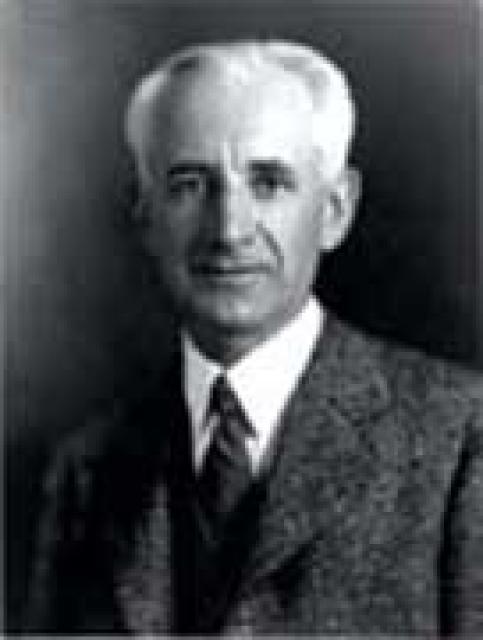
Robert Mearns Yerkes
 USA
USABiography of Robert Mearns Yerkes
Robert Mearns Yerkes (1876–1956) was an American psychologist who gained recognition for his experimental studies on anthropoid apes. He was born on May 26, 1876, in Bridisville, Pennsylvania. Yerkes received his education at Ursinus College and obtained his Ph.D. from Harvard University in 1902.
Academic Career
For 15 years, Yerkes taught at Harvard University and later served as a professor at the University of Minnesota from 1917 to 1919. He then became the head of the Information Division at the National Research Council until 1924. Yerkes subsequently joined Yale University as a professor of psychology, where he led the Primate Biology Laboratory (now known as the Yerkes Laboratory) in Orange Park, Florida until his retirement in 1941. In 1944, Yerkes was honored with the title of Honorary Professor of Psychobiology at Yale University.
Contributions and Publications
Yerkes became renowned for his experimental studies on anthropoid apes, particularly chimpanzees. Some of his notable publications include "The Dancing Mouse, a Study in Animal Behavior" (1907), "Introduction to Psychology" (1911), co-authored in 1915 and revised in 1923, "A Point-scale for Measuring Mental Abilities", "The Mental Life of Monkeys and Apes" (1916), "Almost Human" (1925), "The Mind of a Gorilla" (1927), and "The Great Apes" (1929), co-authored with his wife, Ada W. Yerkes. Additionally, Yerkes published "Chimpanzees, a Laboratory Colony" in 1943.
Legacy
Robert Mearns Yerkes passed away on February 3, 1956, in New Haven, Connecticut. His contributions to the field of psychology, particularly his research on anthropoid apes, have left a lasting impact on the understanding of animal behavior and intelligence. The Yerkes Laboratory continues to be a significant center for primate research and education.