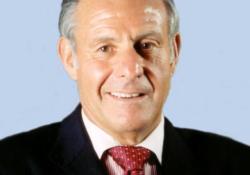
Robert Moses
 USA
USA- Biography of Robert Moses
- Education and Early Career
- Major Projects
- Political Influence and Later Years
- Decline and Legacy
Biography of Robert Moses
Robert Moses, known as "The Master Builder," was a prominent figure in New York City's urban planning and development during the 1930s to 1950s. Born in New Haven, Connecticut to a German immigrant family, Moses grew up in a Jewish household. His father owned a successful business and was involved in real estate. When Moses was 9 years old, his family relocated to New York City.

Education and Early Career
Moses attended Yale University and later pursued further studies at Oxford University's Wadham College. He obtained a doctoral degree in political science from Columbia University. Moses played a significant role in the creation of a network of highways, bridges, tunnels, and causeways that connected various districts of New York City, Long Island, and the mainland.
Major Projects
Throughout his career, Moses led numerous important projects, including the construction of the Lincoln Center for the Performing Arts, the Shea Stadium in Queens with a seating capacity of 50,000, the headquarters of the United Nations, dams, parks, residential complexes, and more. He collaborated with Bella Moskovitz, who served as a political advisor to Governor Al Smith of New York, to establish a state management system that later became the foundation for President Roosevelt's New Deal policies. In the 1920s and 1930s, Moses successfully implemented projects such as Jones Beach and Riverside parks, ten swimming pools in New York City, a network of parkways on Long Island, and the restoration of Central Park.
Political Influence and Later Years
Moses' political influence was solidified when he was appointed chairman of the Triborough Bridge Authority. The substantial annual revenue generated by the bridge system, which connected Manhattan with Queens and the Bronx, provided the financial basis for other large-scale projects. In the post-war years, Moses held positions as the coordinator of city construction and the official representative of New York in Washington D.C. Under his leadership, New York City underwent significant infrastructural changes, including the construction of the Verrazzano-Narrows, Whitestone, and Henry Hudson bridges, highways, the Brooklyn-Battery Tunnel, and residential neighborhoods with tens of thousands of apartments.
In the early 1950s, Moses was appointed the head of the New York State Power Authority. By that time, he held twelve positions simultaneously and had unlimited influence at City Hall. Despite earning a modest salary as a public servant, Moses managed multiple offices, and a chauffeured limousine was available at his home 24/7.
Decline and Legacy
In 1964, Moses became embroiled in a scandal surrounding the financial losses of the World's Fair. His proposed highway through Lower Manhattan, which threatened to destroy Greenwich Village and Soho, sparked intense controversy and was ultimately rejected by the city authorities. Later, his plan for a bridge across the Long Island Sound was also turned down. By this time, Moses faced increasing criticism for his approach to urban planning.
In 1968, Moses resigned due to a conflict with Governor Nelson Rockefeller, gradually losing all of his positions. In his later years, Moses pursued his favorite hobby of swimming and was a member of an exclusive sports club in Colony Hill. He passed away from a heart attack at the age of 92 in Good Samaritan Hospital in New York City.