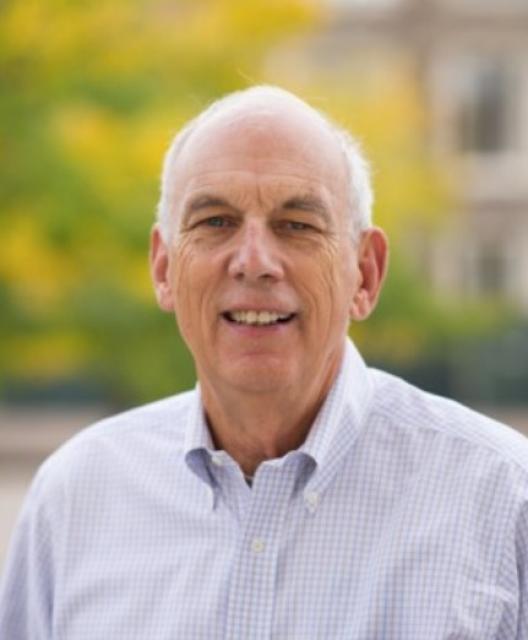
Robert O. Keohane
 USA
USA- Robert Keohane: A Pioneer in International Relations
- Early Life and Education
- Graduate Studies and Influences
- Academic Career
- Key Contributions to International Relations
- Transnational Relations and Global Politics
- International Organization
- Honors and Recognition
- - The John Skytte Prize in Political Science (2005)
- Personal Life
Robert Keohane: A Pioneer in International Relations
Robert Keohane is an American political scientist renowned for his influential contributions to international relations and international political economy.
Early Life and Education
Born in 1941, Keohane attended the University of Chicago Laboratory Schools until the fifth grade. In 1951, his family relocated to Mount Carroll, Illinois, where he completed his secondary education at a public high school and his parents taught at Shimer College.
Keohane entered Shimer in 1956 through an early admission program. He later remarked, "I've never been around more talented people than those first Shimer freshmen." He obtained his bachelor's degree summa cum laude in 1961.
Graduate Studies and Influences
Keohane pursued his doctoral studies at Harvard University, graduating in 1966. He was influenced by Stanley Hoffmann, Judith Shklar, Kenneth Waltz, and Karl Polanyi.
Academic Career
Over the course of his career, Keohane held teaching positions at Swarthmore College, Stanford University, Brandeis University, Harvard University, and Duke University. He was the James B. Duke Professor of Political Science at Duke.
Key Contributions to International Relations
Neoliberal InstitutionalismKeohane is widely associated with the theory of neoliberal institutionalism in international relations. His book "After Hegemony" (1984) is considered a seminal work in the field.
Transnational Relations and Global Politics
Keohane, along with Joseph Nye, developed the concept of "complex interdependence" to explain the fragmentation and diffusion of power in economic affairs. He also coined the term "hegemonic stability theory" and later challenged it with his theory of "cooperation without hegemony."
International Organization
Keohane played a pivotal role in transforming the journal "International Organization" into a leading journal in international relations. He served as its editor from 1974 to 1980.
Honors and Recognition
Keohane has received numerous accolades, including:- The Louis Louisville Grawemeyer Award for Ideas Improving World Order (1989)
- The John Skytte Prize in Political Science (2005)
- Election to the National Academy of Sciences (2005)- The James Madison Award of the American Political Science Association (2014)
- The Balzan Prize for International Relations: History and Theory (2016)
Personal Life
Keohane was an anti-Vietnam War activist and supported Eugene McCarthy's presidential campaign in 1968. He is married to Nannerl O. Keohane, a former president of Duke University and Wellesley College. They have four adult children.





