Robert Sarah
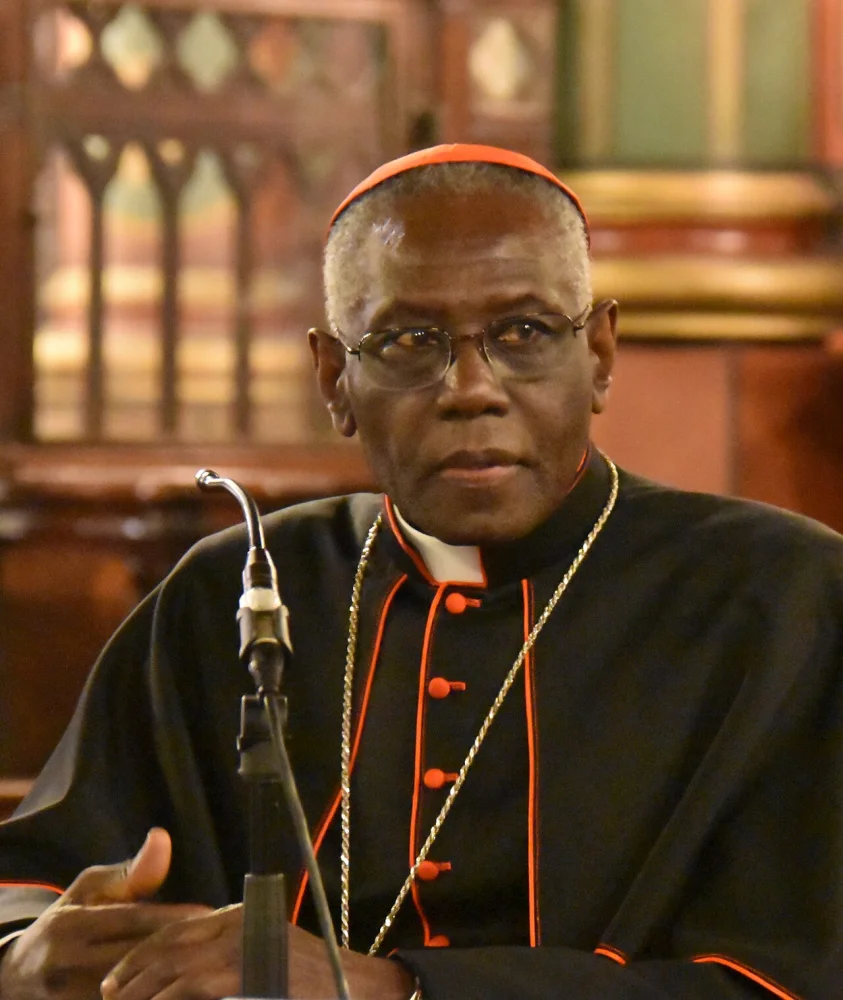
Robert Sarah rose from a rural community in Guinea to become one of the most senior African church leaders in the Vatican. A priest, bishop, and cardinal, he has served in both local pastoral work and major offices of the Holy See. His writing and outspoken views on Catholic worship and doctrine have made him a prominent voice in debates within the modern Church.
Early life and priesthood
Sarah was born on 15 June 1945 in Ourous, Guinea, then part of French West Africa. After secondary school, he left home to continue his studies at a minor seminary in Bingerville, Ivory Coast. Following Guinea’s independence, he returned to complete his education. He was ordained a priest in Conakry on 20 July 1969.
He pursued further studies in theology in Rome and biblical studies in Jerusalem. Back in Guinea, he worked as a seminary rector and parish priest in several communities. In 1979, at age 34, he was appointed Archbishop of Conakry. During the authoritarian rule of Sékou Touré, the Catholic Church faced political pressure, and Sarah’s leadership brought him into public life at a difficult time for religious institutions.
Service in the Vatican
After more than two decades as archbishop, Sarah moved to Rome in 2001 to serve as secretary of the Congregation for the Evangelization of Peoples, the Vatican office responsible for missionary territories. In 2010, Pope Benedict XVI appointed him president of the Pontifical Council Cor Unum, which coordinated Catholic charitable work. Benedict also made him a cardinal that year.
Pope Francis appointed Sarah prefect of the Congregation for Divine Worship and the Discipline of the Sacraments in 2014. From that post, he helped oversee liturgy and sacramental practice in the Catholic Church. He became known internationally for defending traditional forms of worship and emphasizing the centrality of prayer, silence, and the priesthood. His views sometimes placed him at the center of disagreements over how the Church should interpret liturgical reforms and respond to contemporary social changes.
Sarah has written several widely read books, including “God or Nothing,” “The Power of Silence,” and “The Day Is Now Far Spent.” They combine personal recollection with reflections on faith, culture, and the role of Christianity in public life.
A global church leader
Sarah’s tenure as prefect ended in 2021 when Pope Francis accepted his resignation after he reached the customary retirement age. He remains a cardinal and a prominent figure in Catholic debates. His career spans the transition from postcolonial Guinea to the Vatican’s highest levels, and his public image reflects both his pastoral experience in Africa and his firm defense of Catholic tradition.