Robert Shafran
- Early Life and Adoption
- A Chance Reunion
- The Study Behind the Separation
- Life After the Headlines
- Public Response and Legacy
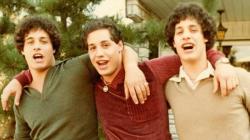
Robert “Bobby” Shafran’s first day at college brought an extraordinary confusion: students welcomed him as if he were an old friend, though he had never been there before. They thought he was Edward “Eddy” Galland, a former student who looked exactly like him. The two young men soon discovered they were identical brothers, and news of their reunion led a third student, David Kellman, to recognize himself in their faces. At 19, Shafran learned that the two strangers he had just met were his triplet brothers.
Early Life and Adoption
Shafran was born on July 12, 1961, in New York. He and his brothers were adopted as infants by three different families in the New York area. Each boy grew up knowing he had been adopted, but none knew that he had identical siblings. Their adoptive families provided different upbringings and had no knowledge that researchers were studying the children as part of a long-term project.
A Chance Reunion
In 1980, Shafran enrolled at Sullivan County Community College in upstate New York. Fellow students greeted him with unusual familiarity and kept calling him “Eddy.” After he learned that another young man who had attended the college looked like him, Shafran went to meet Galland. The resemblance was unmistakable, and hospital records confirmed that they were identical twins.
Their reunion quickly became a national story. Soon afterward, David Kellman and his adoptive mother saw a newspaper article and photograph of the two young men. Kellman recognized his own face in theirs, and the three met. Shafran later described the discovery as finally being given a missing “instruction manual.” The brothers found shared mannerisms and interests, and their fast, affectionate connection became a media sensation.
They appeared together on television, including The Phil Donahue Show, and made cameo appearances in Madonna’s film Desperately Seeking Susan and the television series Cheers. They also opened a New York restaurant called Triplets. Their story seemed at first to be a fairy tale about siblings reunited through coincidence, but the strain of sudden celebrity and the demands of the business eventually pulled their paths apart.
The Study Behind the Separation
In 1997, a Newsday investigation revealed that Shafran, Galland and Kellman had been part of a secret child-development study. Researchers associated with psychologist Peter Neubauer’s Child Development Center had tracked the boys’ behavior and family relationships through home visits, while the families were told the visits were routine developmental monitoring. The research sought to study the effects of heredity and environment, but neither the children nor their adoptive parents had been told the full purpose or that the boys had identical siblings nearby.
The revelation transformed the meaning of the brothers’ reunion. What had seemed like a happy twist of fate was tied to deliberate decisions by an adoption agency and researchers, who placed the infants in separate homes and studied them over time. Shafran and his brothers felt deceived and angry at having been treated as research subjects without their knowledge. Shafran later said that he and Kellman were not simply “subjects” but people whose lives and relationships had been shaped by decisions made for them.
Life After the Headlines
Shafran pursued a legal career and was practicing law by the time the story returned to public attention in the late 1990s. He married and had two children. He and Kellman remained in touch, though their relationship, like that of many siblings, had its own difficulties. The brothers also faced the death of Galland, who died by suicide in 1995 after a struggle with mental illness. Shafran and Kellman later questioned whether information about family history had been withheld from them; no public evidence established that the separation caused Galland’s death.
In 2018, director Tim Wardle’s documentary Three Identical Strangers brought the brothers’ history to a new audience. Shafran and Kellman participated after years of hesitation about how the media might handle their story. The film included their account of seeking answers and access to records from the study. The Jewish Board of Family and Children’s Services later provided them with thousands of pages, though much of the material was heavily redacted and no formal study conclusions had been published.
Public Response and Legacy
Shafran’s story has become part of a wider debate about adoption, research ethics and the limits of studying human development without informed consent. He and Kellman sought fuller access to the records and called for an apology and accountability from organizations connected to the study. Their case also brought attention to other twins who had been separated and studied without their families’ knowledge.
For Shafran, the discovery of his brothers brought genuine joy and a lasting bond, but the story’s later revelations complicated that reunion. His experience remains a vivid example of how a chance meeting can uncover a hidden history—and how people can reclaim some control over their story by speaking publicly about what was done to them.