Robert Shuman
 Germany
Biography of Robert Schumann
Robert Schumann was a German composer, educator, and influential music critic who belonged to the second generation of Romantics. Throughout his life, he rebelled against bourgeois values, which is reflected in his music. Schumann's music is characterized by a profound psychological depth and a deep insight into the human soul. He skillfully portrays the shifts in emotional states, reflecting the dual nature of his own personality.
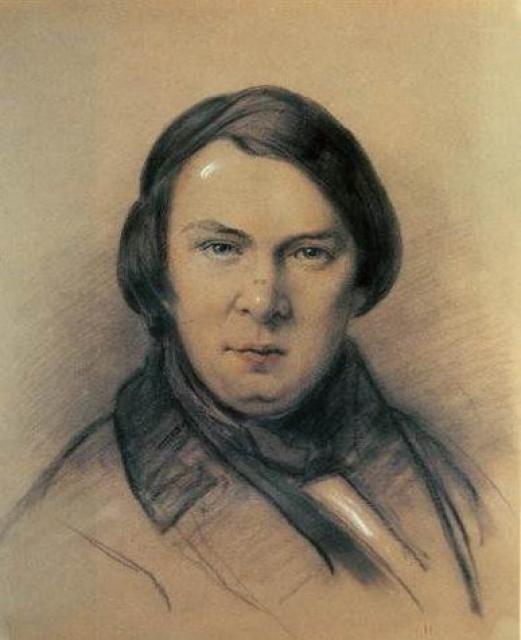
Aside from his musical career, Schumann was also a gifted writer. He wrote novels, short stories, articles, plays, letters, dialogues, and other literary works. His articles often featured unconventional characters, and he even created a fictional society called the "Davidsbündler," of which he included personalities such as Mozart, Paganini, Chopin, and his wife Clara Wieck. Schumann used the pseudonyms Florestan and Eusebius to represent the contrasting aspects of his own personality. His literary talents extended to his music criticism, where he championed the works of Chopin, supported Berlioz, and wrote articles about Beethoven and Brahms.
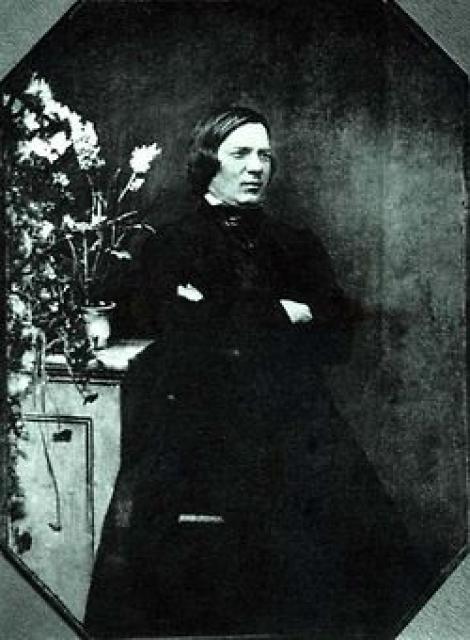
Born into a family of publishers, Schumann displayed both literary and musical talents from an early age. He attended grammar school and composed poetry, comedies, and dramas. He studied the works of Schiller, Goethe, and ancient literature and even organized a literary circle. Schumann was particularly enthralled by the poet Jean Paul, and under his influence, he wrote a novel. He also began writing music at the age of seven and was greatly impressed by the pianist Moscheles. Initially, he studied under the organist Kuntz, who guided him in the music of Mozart and Weber. Schumann developed a fondness for Schubert and composed several songs inspired by his works. In 1828, influenced by his mother, he enrolled in the University of Leipzig to study law. However, he also continued his piano studies under Friedrich Wieck for thirty years. Schumann attended a Paganini concert and aspired to become a virtuoso himself. This inspired him to write etudes based on Paganini's caprices and concert etudes.

During his university years, Schumann formed a circle of music enthusiasts and wrote a cycle of piano pieces called "Papillons" (Butterflies). In 1829, he transferred to the University of Heidelberg but eventually dropped out. While studying at the university, he traveled to Munich, where he met Heinrich Heine, and also visited Italy. It was during this period that he composed the variations "Abegg," the Toccata, and "Papillons," as well as arrangements of Paganini's caprices. After leaving the university, Schumann settled in Leipzig with Wieck and focused on composition and arranging under the guidance of Heinrich Dorn.
The 1830s marked the dawn of Schumann's piano compositions. He wrote symphonic etudes, the famous "Carnaval," the Fantasy, and other fantastical pieces. He also began his career as a music critic. His first article was about Chopin, titled "Gentlemen, I Take off My Hat Before You, Genius!" In 1834, Schumann founded the "Neue Zeitschrift für Musik" (New Journal for Music). Through this publication, he advocated against conservatism and philistinism, promoting the works of Berlioz, Liszt, Brahms, Polish and Scandinavian composers, and calling for the establishment of a German music theater in the traditions of "Fidelio" and "The Magic Flute."
The style of Schumann's articles was highly emotional. In 1839, he discovered Schubert's Symphony in C Major and had it performed by Felix Mendelssohn. In 1840, Schumann married Clara Wieck and composed numerous songs such as "Myrthen" and "Dichterliebe." The 1840s and early 1850s brought symphonies, chamber ensembles, piano concertos, oratorios like "Paradise and the Peri," scenes from Goethe's "Faust," and music for Byron's "Manfred." In 1843, Mendelssohn opened the Leipzig Conservatory and invited Schumann to teach piano, composition, and score reading. However, in 1844, Schumann had to step down from his positions due to health issues. He traveled to Russia with Clara, where Mendelssohn's and Italian music were highly popular. His significance as a composer was only recognized by a few, such as Anton Rubinstein, Tchaikovsky, and members of the "Mighty Handful."
In the 1850s, the Schumann family moved to Düsseldorf, where Robert served as the conductor of the orchestra and choral societies. In 1853, he met Johannes Brahms, and his last article was about Brahms. In 1854, Schumann attempted suicide but was saved. Although he received treatment, he eventually succumbed to mental illness and spent the last two years of his life in a psychiatric hospital. Schumann's music is highly introspective, reflecting various contrasting emotional states and their transitions. He particularly enjoyed composing piano miniatures and cycles, as they allowed him to express contrasting emotions. He also incorporated programmatic elements in his music, often inspired by literary characters. Schumann's compositions include approximately 50 collections of piano pieces, variations on the theme of "Abegg," "Carnaval," symphonies, etudes, "Davidsbündlertänze," fantastic pieces, "Kreisleriana," "Viennese Carnival," novelties, three piano sonatas, a fantasy, over 200 songs, vocal cycles like "Dichterliebe" and "Liederkreis," "Myrthen," "Frauenliebe und -leben," Spanish love songs, songs from Goethe's "Wilhelm Meister," four symphonies, piano, cello, and violin concertos, a piano concerto by Schumann's pupil Sterndale Bennett, a horn concerto, three string quartets, a piano quartet, three piano trios, two violin sonatas, and other chamber ensembles. He also composed the oratorio "Paradise and the Peri," an opera "Genoveva," music for dramatic plays, and around 200 critical articles about music and musicians.