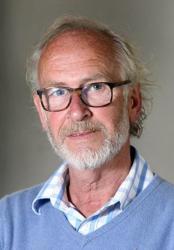
Robert Smirnov
 Russia
- Early Life and the Outbreak of War
- Learning the Realities of War
- Blockade and Tragedy
- Evacuation and Recovery
- Post-War Life
Early Life and the Outbreak of War
Robert Vasilyevich Smirnov was born in 1926. On the day the Great Patriotic War began, the 15-year-old, newly issued with a passport, was initially upset because it coincided with a boxing match he had purchased tickets to.
Young Robert had little understanding of the gravity of the situation. Observing the nightly bombings from the rooftop of a six-story building with other boys, he failed to grasp the horrors unfolding on the other side.
Learning the Realities of War
The media swiftly instructed the populace on extinguishing incendiary bombs, and Robert soon had the opportunity to put these lessons into practice. From the attic, he gathered sand and dispersed it on falling bombs.
Smirnov joined a "semi-military unit" where he and his peers received training in shooting, grenade-throwing, and urban combat scenarios in anticipation of a potential German invasion.
Blockade and Tragedy
As a member of his school's medical team, Robert witnessed the devastating fire at the Badayev Warehouses on September 12. Food shortages became prevalent from August onwards, and by December, Smirnov, now a ninth-grader, had ceased attending school.
During the siege of Leningrad, Robert's father and older brother succumbed to starvation. Survival became paramount, and Smirnov resorted to consuming cat and dog meat and meager rations as a dependent.
Evacuation and Recovery
On March 13, 1942, Smirnov and his sister evacuated from the beleaguered city via Lake Ladoga. Witnessing the desperation and weakness of the evacuees, he was transported by train to the North Caucasus. En route, he was provided with food rations.
In Kislovodsk, Smirnov and his sister found shelter with a local woman, where he began his physical recovery.
Post-War Life
Smirnov was recruited into the People's Commissariat of Social Security (NCPS) and assigned to Sverdlovsk. There, he worked in a factory and traveled to Moscow to assist in welding damaged railway tracks.
In 1943, he moved to Vyazma before being relocated to Yalutorovsk in 1944. Afterwards, he returned to Moscow.
After the war, Robert completed his education at a school for working youth while working as an assemblyman. News of Victory reached him en route to Minsk, 30 kilometers from Moscow.