Roedad Khan
 Pakistan
- Education and early service
- At the center of national politics
- Writer and commentator
- A witness to a century
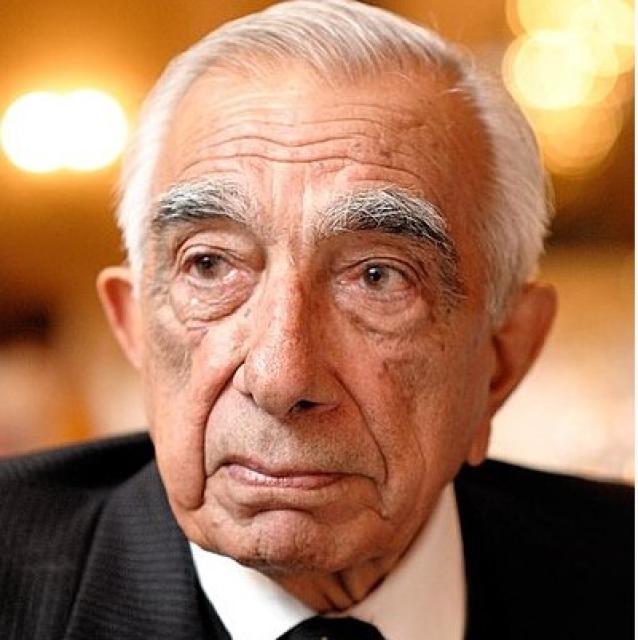
Roedad Khan spent more than four decades in Pakistan’s civil service, rising from provincial administration to some of the country’s most powerful government posts. He worked under multiple presidents and prime ministers, served as interior secretary during General Zia-ul-Haq’s military rule, and later wrote candidly about Pakistan’s difficult political history. His career gave him an unusually close view of the state’s shifting balance between elected leaders and military power.
Education and early service
Born in Mardan in 1923, Khan studied at Forman Christian College in Lahore before completing a master’s degree in history at Aligarh Muslim University in 1946. After returning to what had become Pakistan, he taught history at Islamia College in Peshawar and joined the Pakistan Civil Service in 1949. His first government assignments took him into provincial administration, where he served as secretary to the chief minister of Sindh and later held senior roles in the western provinces.
Khan’s rise coincided with the early decades of a new country still defining its institutions. He served as chief secretary in Sindh and the North-West Frontier Province, now Khyber Pakhtunkhwa, and worked in areas including development and irrigation. He became known as a disciplined administrator, but his growing responsibilities also placed him inside the political decision-making of successive governments.
At the center of national politics
Over the years, Khan held posts across government, including managing director of Pakistan Television and secretary in the ministries of information, labour and tourism. His time at PTV coincided with the turbulent period around the 1970 general election and the crisis that led to the secession of East Pakistan in 1971. He was thus both a public servant and a witness to some of the most consequential chapters in Pakistan’s early history.
His career also brought him into direct service under military rulers. During Zia-ul-Haq’s government, Khan served as interior secretary, responsible for a ministry central to domestic security and political order. His tenure under martial law remains an important part of his legacy, illustrating how senior civil servants could become influential operators within authoritarian administrations as well as in elected governments.
After leaving the regular civil service, he returned to public office in the early 1990s as federal minister for accountability during Nawaz Sharif’s first government. He also advised presidents and prime ministers, continuing to have a role in national affairs even after retiring from administrative service.
Writer and commentator
Khan wrote extensively about Pakistan’s leadership and political development. His book Pakistan: A Dream Gone Sour examined the country’s presidents and its recurring struggle for political stability. In later essays and interviews, he returned to ideas associated with Muhammad Ali Jinnah’s vision for Pakistan, including democratic government, social justice and the rule of law.
His position as both participant and commentator gave his reflections a particular weight, but also invited scrutiny. He had held senior posts under civilian leaders and military regimes, and critics have questioned the role bureaucrats played in sustaining political control. Khan’s own accounts often placed responsibility for Pakistan’s democratic setbacks on military rulers and weak political institutions, while his career showed the close, sometimes uneasy relationship between the two.
A witness to a century
Khan remained a prominent voice in Pakistan well into old age, commenting on politics and public affairs and speaking with journalists about events he had seen firsthand. He died in Islamabad in April 2024 at the age of 100.
His long career traced the arc of Pakistan’s modern state: from the first years after independence, through military rule and political crises, to the uncertain democratic period that followed. Remembered as a seasoned administrator and a chronicler of national upheaval, Roedad Khan left behind both a record of public service and a written account of a country whose promise, in his view, repeatedly collided with the realities of power.