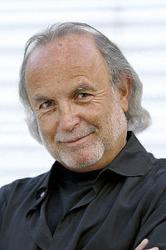
Roger Corman
 USA
USA- Roger Corman: The Most Prolific Director on the Planet
- Early Career in Hollywood
- American International Pictures and the "B" Movie Genre
- Artistic Style and Inspiration
- Literary Adaptations and Cult Classics
- Prestigious Adaptations and Genre Masterpieces
- New World Pictures and Transition to Production
- Influence on American Cinema
- Distribution and International Collaborations
- Oscar Recognition and Legacy
Roger Corman: The Most Prolific Director on the Planet
Early Life and EducationRoger Corman was born in Detroit on April 5, 1926. After graduating from Oxford's Balliol College, he enrolled in Stanford University to study engineering. However, Corman soon discovered his passion for filmmaking and became an amateur filmmaker.
Early Career in Hollywood
In the 1940s, with the lack of formal filmmaking programs, Corman joined 20th Century Fox as a general laborer. He eventually worked his way up to script analysis and, at the age of 27, co-produced his first film.
American International Pictures and the "B" Movie Genre
Corman's first major breakthrough came with American International Pictures, a distribution company that allowed him to make his feature directorial debut, "Monster from the Ocean Floor" (1954). His prolific pace of filmmaking, often in the "B" movie genre (science fiction and horror), saw him produce four films in 1955 and nine in 1957.
Artistic Style and Inspiration
Corman developed a distinct directorial style that emphasized speed and frugality. He infamously reused props between films, such as the bats from "It Conquered the World" (1956) in "The Undead" (1957). Despite his low budgets, he aimed to create films that appealed to the tastes and desires of the audience. Corman cited authors H.P. Lovecraft and Edgar Allan Poe as major influences on his work.
Literary Adaptations and Cult Classics
In the 1960s, Corman's commercial success allowed him to realize his ambition of adapting Poe's "The Fall of the House of Usher" (1961). This film became one of the highest-grossing films of 1961, outperforming several Hollywood blockbusters. He followed this with the cult classic "The Little Shop of Horrors" (1961) about a man-eating plant.
Prestigious Adaptations and Genre Masterpieces
Corman continued his streak of acclaimed adaptations of Lovecraft and Poe. "The Haunted Palace" (1963), based on Lovecraft's novel, achieved even greater box office success by falsely attributing its source material to Edgar Allan Poe. "The Masque of the Red Death" (1964), another Poe adaptation, is considered one of Corman's greatest works and a fundamental horror film.
New World Pictures and Transition to Production
In 1971, Corman founded New World Pictures and gradually transitioned from directing to producing. He directed only one more film, "Frankenstein Unbound" (1990). His production company became a force in the film industry, releasing such cult classics as "Death Race 2000" (1975) and "Piranha" (1978).
Influence on American Cinema
As a producer, Corman nurtured the careers of countless filmmakers and actors, including Jack Nicholson, Robert De Niro, Martin Scorsese, and James Cameron. He is widely regarded as the father of American independent cinema and the standard-bearer for "B" movies.
Distribution and International Collaborations
Corman's New World Pictures also played a significant role in distributing films. He championed European filmmakers, introducing American audiences to the works of Federico Fellini, Ingmar Bergman, and Werner Herzog.
Oscar Recognition and Legacy
In 2009, Corman was awarded an honorary Academy Award for his significant contributions to the film industry. He is hailed as a master of horror and science fiction, and his work continues to inspire and entertain audiences worldwide.