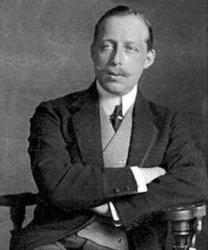
Roger David Casement
 Ireland
- Early Life and Diplomatic Career
- The Congo Report
- Work in Peru
- Irish Nationalist Movement
- World War I and German Alliance
- Trip to Germany and Arrest
- Execution and Legacy
- Personal Life and Black Diaries
- Burial and Commemoration
Early Life and Diplomatic Career
Roger Casement was born near Dublin, Ireland, in 1864. His father was a Protestant captain in the British army, while his mother was from Dublin. After losing both parents at a young age, Casement attended school in Ballymena before leaving at 16 to work as a clerk in Liverpool.
In 1882, Casement joined the British Foreign Office. He served as consul in Mozambique (1895-1898), Angola (1898-1900), and the Congo (1901-1904).
The Congo Report
In 1903, Casement was sent to investigate human rights abuses in the Congo Free State, the private possession of King Leopold II of Belgium. The resulting report, known as the Casement Report, exposed widespread atrocities and led to international outcry.
Work in Peru
Casement was appointed consul to Brazil in 1906 and later became consul general in Rio de Janeiro. While in South America, he investigated the crimes of the Peruvian Amazon Rubber Company, uncovering similar abuses to those he had witnessed in the Congo.
Irish Nationalist Movement
Casement retired from the Foreign Office in 1913 and joined the Irish nationalist movement. He helped establish the Irish Volunteers and became their chief organizer in the United States, where he sought support from Irish-American organizations such as Clan na Gael.
World War I and German Alliance
With the outbreak of World War I, Casement made contact with German diplomats in New York and proposed an alliance. He promised that if Germany provided weapons and officers, the Irish would revolt and divert British attention.
Trip to Germany and Arrest
Casement traveled to Germany in 1915 and spent much of his time rallying Irish prisoners of war to join the Irish Brigade. He also helped develop plans for an Indian rebellion against British rule.
In April 1916, Germany supplied a shipment of weapons destined for Ireland, but it was intercepted by British forces. Casement was unaware of the impending Easter Rising in Dublin, which had been planned by the Irish Republican Brotherhood.
He landed in Ireland on April 21, 1916, but was arrested shortly afterward. Charged with treason, he was convicted and sentenced to death despite objections that the alleged offenses had occurred in Germany, beyond the jurisdiction of the Treason Act.
Execution and Legacy
Casement was hanged in August 1916. His execution sparked widespread protests and calls for clemency from notable figures such as Arthur Conan Doyle, William Butler Yeats, and George Bernard Shaw.
Personal Life and Black Diaries
Casement was homosexual, and his diaries, known as the "Black Diaries," were used in his trial to discredit him. The authenticity of the diaries has been the subject of debate, but forensic analysis in 2002 confirmed their validity.
Burial and Commemoration
Casement's body was initially buried in England, but was later reburied with full military honors in Dublin in 1965. He remains a controversial and revered figure in Irish history, remembered for his humanitarian work, his role in the Easter Rising, and his complex personal life.