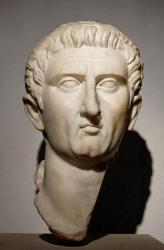
Roger II
 Italy
- From Count to Ruler
- Founding the Kingdom of Sicily
- Mediterranean Reach and Cultural Legacy
- Family and Succession
Roger II transformed a Norman family’s possessions in southern Italy into the Kingdom of Sicily, becoming its first king in 1130. A forceful strategist and administrator, he spent much of his reign asserting authority over rebellious nobles and resisting papal and imperial opponents. His court in Palermo also brought Latin, Greek, and Arabic traditions together, giving his kingdom a distinctive place in medieval Mediterranean history.
From Count to Ruler
Born in 1095, Roger was the son of Roger I, the Norman count who had helped conquer Sicily, and Adelaide del Vasto. When his elder brother Simon died in 1105, Roger inherited the county while still a child. His mother governed as regent, and the family’s political centre shifted toward Palermo. Roger began ruling in his own right in 1112.
The Norman territories in southern Italy remained divided among competing rulers. Roger used diplomacy, military force, and carefully negotiated alliances to enlarge his position. When his cousin William II, duke of Apulia and Calabria, died without an heir in 1127, Roger claimed the mainland lands and overlordship associated with the duchy. Pope Honorius II resisted the expansion, but in 1128 he invested Roger as duke. By 1129, the principal mainland powers had largely acknowledged his title.
Founding the Kingdom of Sicily
A papal schism in 1130 offered Roger an opening. He supported Antipope Anacletus II, who granted him the royal title. Roger was crowned in Palermo on Christmas Day that year as king of Sicily. His claim drew fierce resistance from the supporters of Pope Innocent II and from local nobles and cities wary of centralized rule. Rebellions and campaigns on the mainland occupied much of the following decade.
Roger worked to make royal authority effective across his diverse territories. The Assizes of Ariano, issued in 1140, set out laws and procedures for the kingdom and reinforced the king’s role as its central authority. His court and administration drew on Latin, Greek, and Arabic-speaking officials and expertise, reflecting the populations and political traditions of Sicily and southern Italy.
Mediterranean Reach and Cultural Legacy
Roger’s ambitions extended across the Mediterranean. His fleets attacked Byzantine holdings, and Norman forces took control of parts of the North African coast. In 1148 he adopted the title King of Africa, though this overseas dominion proved short-lived and did not become a lasting part of the kingdom.
In Palermo, Roger supported a court where scholars, artists, and administrators from different cultural backgrounds worked under Norman rule. The royal palace and its Palatine Chapel became striking expressions of that mixture, combining Latin Christian planning with Byzantine mosaics and Arabic craftsmanship. The richly decorated royal mantle made for his court likewise embodied the kingdom’s broad artistic connections.
Family and Succession
Roger’s first wife was Elvira of Castile. Their sons included Roger, who was designated heir but died before his father, and William, who succeeded to the throne. After Elvira’s death, Roger married Sibylla of Burgundy and later Beatrice of Rethel. His daughter Constance, born after his death, would eventually become an important link in the succession of the Sicilian crown.
Roger died in Palermo on February 26, 1154, and was buried in the city’s cathedral. His kingdom did not end with him: it continued under his son William I. Roger’s achievement was not simply a new royal title, but the creation of a durable state whose institutions and cultural life reached across the central Mediterranean.