Roland Freisler
 Germany
Biography of Roland Freisler
Roland Freisler was the President of the People's Court in Nazi Germany, which tried cases of treason from 1934 to 1945. During his time as president, 5,243 death sentences were handed down, with Freisler personally signing 4,951 of them. Adolf Hitler referred to him as "our Vyshinsky," comparing him to the Soviet prosecutor, and closely followed his career.
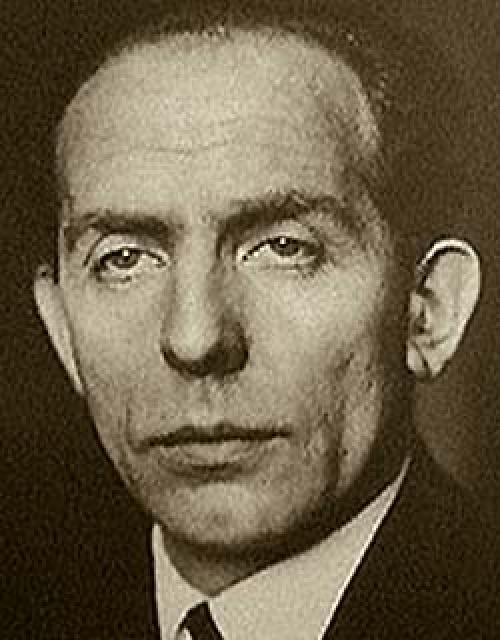
Freisler's career began during World War I, where he fought on the Russian front as a promising law student. He was imprisoned in a camp for prisoners of war near Moscow during the October Revolution. Freisler admired the new rulers of Russia, their determination to dominate, and their ability to assert their ideology at any cost. He learned the Russian language, studied Marxist ideologies, read Soviet newspapers, and eventually joined the Bolsheviks. He even became a camp commissar.
Upon returning to Germany, Freisler completed his university education, earning a doctorate in law. However, his true calling was in politics. When Hitler emerged from prison in 1925 with his manuscript "Mein Kampf" and restarted the banned National Socialist Party, Freisler saw the party's goals as aligning with his own views on the world. He quickly joined the party, becoming member number 9679. Hitler, either jokingly or seriously, referred to him as "our Vyshinsky" and closely followed his career.
Career in the People's Court
Freisler particularly enjoyed presiding over open trials, where he thrived on the attention and approval of party officials, Gestapo officers, SS ranks, and the police. He would often shout, humiliate the defendants, and prevent them from speaking. To him, listening to the defendants was unnecessary, as the verdict was predetermined: "I hand down verdicts that the Führer himself would hand down." In Nazi Germany, Freisler was a prominent legal theorist who merged law with the ruling ideology, freeing it from legal formalities that irritated Nazi leaders. In his works, he translated the word "justice" not as "justice" but as "the destruction of the enemy."
Freisler's theory was based on the premise that in a state where the individual is merely a fraction of the people and the regime embodies all the aspirations of the people, any act considered a crime is a crime against the people and the regime. The individual's personality disappears at the judge's bench. On one side, there is "our homeland," "our people," "our party," "our army," "our victory," embodied by a loud person in a red robe with Aryan facial features, cold and transparent eyes. On the other side, it is not just a certain Schultz or Müller who committed a certain offense, but "traitor to the homeland," "enemy of the people," "opponent of the party," "traitor to our common cause," "defeated and accomplice of the enemy." Indeed, it was all like Andrei Yanuaryevich's case... Now it's Müller's case, no longer just a generic one.
Priest Josef Müller once told a friend about a dying soldier in a military hospital. Seeing Hitler's portrait on the right side of the wall and Göring's on the left, the soldier jokingly said, "I'm dying like Christ." The friend, named in the case as a "Volksgenosse," literally - a comrade of the people - reported this remark, and Müller was prosecuted and sentenced to death. The execution of Elfriede Schultz, the sister of writer Erich Maria Remarque, cost 127 Reichsmarks and 18 pfennigs. She was executed in 1943, ten years after her brother's internationally renowned book "All Quiet on the Western Front" was burned. She was convicted for criticizing the Third Reich regime.
The People's Court was established after the Reichstag fire trial, as the Nazis failed to completely control the legal system. In the Third Reich, a new type of state, there should be no situation where justice interferes with politics. "I define what is right," proclaimed Hitler. Freisler was appointed as the President of the People's Court, calling himself "your political soldier" in a letter of gratitude to the Führer.