Romeo Hadley
 Great Britain
- Lightning Strikes: A Life-Threatening Diagnosis
- The Agony of Treatment
- Recovery and Rehabilitation: A Journey of Strength
- Embracing the Challenges of Prosthetic Life
- "My Legs Are Not Real": Embracing Differences
- First Steps: A Triumph of the Spirit
- A Future Full of Promise
- Looking Forward: Dreams within Reach
- What is Purpura Fulminans?
Little Brit Who Defied the Odds: Walking After Losing Legs to Rare Disease
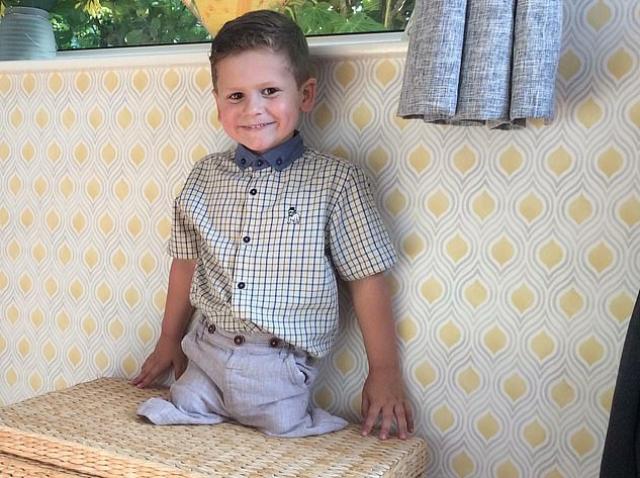
At the tender age of seven, Romeo Hadley made his first steps on prosthetic legs, defying the devastating effects of a rare disease that had left him without limbs. Romeo, who has been in foster care since he was two years old, endured immense pain, bruising, and flu-like symptoms when he was three.
Lightning Strikes: A Life-Threatening Diagnosis
Diagnosed with an acute condition known as "purpura fulminans" at a Cardiff hospital's emergency department, Romeo's lower legs were necrotizing—a gangrenous attack on the body's cellular structure. Forced to amputate Romeo's legs above the knee to save his life, doctors kept him in the hospital for six months before he could finally return home. Prosthetic legs, however, would not be fitted until October 2017.
The Agony of Treatment
Romeo's mother, 46-year-old Katie, shared a video of her son taking his first steps without assistance. The life-threatening condition of purpura fulminans manifests as blood spots, bruising, and discoloration of the skin. If not treated, the affected skin becomes gangrenous. "It's usually fatal, so we were incredibly lucky that our little boy survived," said Katie. Prior to the amputation, doctors had made incisions in Romeo's legs to relieve pressure and slow the disease's progression, but it offered little solace. "It was horrendous," Katie recalled. "I will never forget it."
Recovery and Rehabilitation: A Journey of Strength
For three out of the six months he spent in the hospital post-amputation, Romeo was heavily sedated and had his dressings changed continually. He required multiple skin grafts due to the extensive loss of tissue and muscle. Patience was also required as he learned to use a stoma bag, a small opening in his body, to prevent infection of his buttocks from weeping wounds.
Embracing the Challenges of Prosthetic Life
With an artificial opening now part of Romeo's body for the passage of waste from his intestines and urine from his urinary tract, he faced a new set of challenges upon his discharge from the hospital. While still under medical supervision, he spent much time lying down, and even sitting up was difficult at home. "We didn't know if this was going to be a permanent thing, but over time, with our support, he built up his confidence and strengthened his muscles," said Katie. "He's come on really quickly now. The doctors never thought he would ever be able to sit outside of a wheelchair, but he has proven them all wrong and has been mobile ever since."
"My Legs Are Not Real": Embracing Differences
Attached to a belt around his stomach, Romeo's prosthetic legs offered a new sense of independence. The medical team had been waiting until he was able to be weaned off his stoma bag before he could be fitted for prosthetics. Eventually, plaster molds were made in March 2017 for the creation of the artificial limbs, which Romeo began using in the autumn of that year. "His legs were so small, and the prosthetics were so heavy," explained his mother. "It was such hard work for him to be able to get the prosthetics to work."
First Steps: A Triumph of the Spirit
Designed to bend, lock, and unlock as Romeo puts his heels down correctly, the prosthetics require him to focus intently to stay upright. For him, even 20 minutes a day on his prosthetic legs is a significant achievement. Katie arranged for him to take his prosthetics to school, and last month, she was sent a video of Romeo walking with support from his teacher, upon whose lap he rested his hands. "I was blown away by it," said Katie. "His dad and I, the whole family, my daughter Seren, we were all amazed at how well Romeo was doing."
A Future Full of Promise
Although his prosthetics are not intended for extended wear, they give Romeo confidence that he will be able to achieve more in the future. He enjoys playing football and hopes to become a professional basketball player one day. "We're going to make him as strong as we can mentally so he can cope in the future," added Katie. "Romeo is so happy with life, he's just amazing and happy just as he is. He gets on with it... he just gets on with every day."
Looking Forward: Dreams within Reach
His parents believe that within their son's lifetime, advancements in prosthetic technology will enable Romeo to fully achieve his dreams. "That's what we hold onto," Katie said. "And we keep him positive because he is so positive anyway."
What is Purpura Fulminans?
Purpura fulminans is an extremely rare condition that affects approximately one in every 500,000-1,000,000 children, according to Medscape. Only a handful of cases have been reported in adults. A life-threatening condition, it is usually caused by an inherited deficiency of proteins that prevent the blood from clotting, known as protein C. Other causes of purpura fulminans include mutations in genes and severe blood loss from liver failure. The condition manifests as blood spots, skin lesions, bruising, and discoloration of the skin. It progresses rapidly over 24-48 hours to necrosis of the skin or tissue, leading to the death of most or all cells in the affected area. Treatment may take four to eight weeks. If left untreated, the affected areas can become gangrenous, leading to amputation. Purpura fulminans is also associated with multiple organ failure and is a predictor of severe acute sepsis.