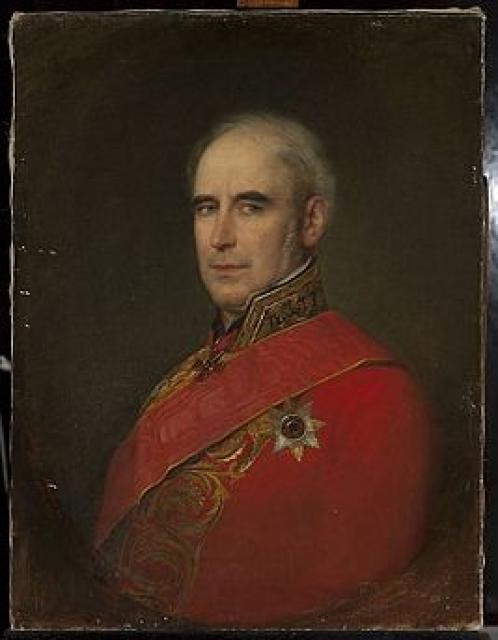
Romuald Gube
 Poland
- Early Life and Education
- Career in Academia
- Legal Career
- Codification and Judicial Reforms
- Member of the State Council
- Scholarly Contributions
- Studies on Slavic Law
- History of Polish Law
- Other Works
Early Life and Education
Roman Ignacy Gube was a Polish historian and jurist born in Warsaw. He graduated from the University of Warsaw and pursued further studies in Berlin, where he was influenced by the teachings of Hegel and Savigny.
Career in Academia
Upon his return to Warsaw, Gube became a lecturer in Roman, German, and French law at the University of Warsaw. He later became a full professor of canon and criminal law. After the closure of the university in 1833, Gube was summoned to St. Petersburg to participate in the revision of Polish laws.
Legal Career
In St. Petersburg, Gube served in the Second Department of the Imperial Chancellery. He was appointed a member of the committee for the revision of the draft penal code in 1840. From 1841 to 1845, he taught administrative and criminal laws for students from the Kingdom of Poland at St. Petersburg University.
Codification and Judicial Reforms
Gube participated in a diplomatic mission to Rome in 1846. In 1860, he was appointed Senator of Warsaw while remaining in the Second Department. From 1856 to 1861, he chaired the Codification Commission of the Kingdom of Poland. He later served as a member of the Council of the Kingdom of Poland and remained a Senator after the abolition of these institutions in 1867.
Member of the State Council
In 1877, Gube was appointed a member of the State Council, where he served until 1882 in the departments of ecclesiastical and civil affairs.
Scholarly Contributions
Gube was renowned for his extensive erudition in his scholarly works. He focused primarily on the factual description of legal practices and devoted special attention to legal sources.
Studies on Slavic Law
Gube's most valuable contributions were in the field of Slavic law. In his work "On the Significance of Roman and Romano-Byzantine Law among Slavic Peoples" (1868), he explored the reception of Roman and Byzantine law by Slavic nations. His idea of the Slavic origin of certain Byzantine institutions paved the way for further research by Byzantine scholars.
History of Polish Law
Gube's three major works on Polish law complement each other: "Polish Law in the Thirteenth Century" (1874), "Polish Law in the Fourteenth Century" (1881), and "Courts, Practices, and Legal Relations in Society in Sixteenth-Century Poland" (1886). These works provide a comprehensive account of Polish legal history.
Other Works
Gube authored numerous other works, including a history of Russian criminal law, a collection of Polish judicial oaths, and studies on Burgundian, Salic, and Italian law.


