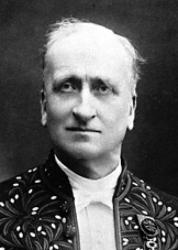
Franz Gurtner
 Germany
Biography of Franz Gurtner
Franz Gurtner was a prominent figure in Nazi Germany, serving as the Reich Minister of Justice in Adolf Hitler's cabinet. Born on August 26, 1881, in Regensburg, Gurtner came from a humble background, with his father working as a locomotive driver.
After completing his secondary education, Gurtner enrolled at the University of Munich, where he studied law. During World War I, he fought on the Western Front and in Palestine, earning the Iron Cross First and Second Class for his bravery. Upon returning home from the war, Gurtner pursued a successful career in jurisprudence, eventually becoming the Minister of Justice for Bavaria on November 8, 1922.
As a member of the Nazi Party, Gurtner sympathized with right-wing extremists, including Adolf Hitler. He closely observed the trial proceedings of the Beer Hall Putsch in 1924 and criticized the lenient sentence given to Hitler. Despite his initial reservations, Gurtner played a significant role in Hitler's release from prison and later persuaded the Bavarian government to legalize the Nazi Party.
Throughout his tenure as Minister of Justice in various cabinets, including those of Franz von Papen and Kurt von Schleicher, Gurtner attempted to maintain some semblance of legal norms amidst the brutal methods of the Gestapo and the SA. He protested against the mistreatment of prisoners in concentration camps under the jurisdiction of local SA leaders. However, his appeals to Hitler and complaints about the use of torture were disregarded.
Despite his futile attempts to curb the brutality of the Nazi regime, Gurtner played a significant role in legitimizing these methods. After the Night of the Long Knives, he passed a law providing a legal basis for the purges and annulled attempts to prosecute those responsible for the killings. Gurtner's loyalty to the Nazis was evident, and he continued to issue sanctions and official authorizations for criminal activities during World War II.
On January 29, 1941, Gurtner unexpectedly passed away in Berlin. Many questioned the circumstances surrounding his death, suspecting foul play due to his disapproval of Nazi methods.