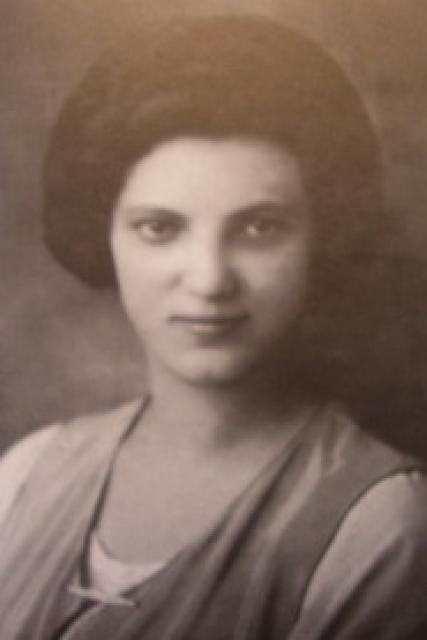
Rose Auslander
 Germany
- Rose Ausländer: A Lyric Poet of Identity and Loss
- Early Life and Education
- Return to Czernowitz and First Poetry Collection
- Holocaust and Liberation
- Return to the US and Poetic Silence
- Return to Germany and Later Years
- Legacy and Recognition
Rose Ausländer: A Lyric Poet of Identity and Loss
Rose Ausländer was a German poet of Jewish descent who wrote in both German and English. Born in 1901 in Czernowitz, Austria-Hungary (now Ukraine), she grew up speaking a mixture of German, Yiddish, and Ukrainian.
Early Life and Education
Ausländer studied at the University of Czernowitz and in Vienna. In 1921, she married Ignaz Ausländer and emigrated with him to the United States. She became an American citizen in 1926 and published her first poems in New York City in 1928.
Return to Czernowitz and First Poetry Collection
In 1931, Ausländer returned to Czernowitz to care for her ailing mother. She remained there until 1936, losing her American citizenship in the process. With the support of fellow poet Alfred Margul-Sperber, she released her debut poetry collection, "Rainbow" ("Der Regenbogen"), in Czernowitz in 1939. However, much of the print run was destroyed during the German occupation of the city.
Holocaust and Liberation
During the Holocaust, Ausländer was imprisoned in the Czernowitz ghetto. There, she met fellow poet Paul Celan, who became a lifelong friend. After hiding for a year to avoid deportation to a concentration camp, she was liberated by Soviet troops in 1944.
Return to the US and Poetic Silence
Ausländer returned to the United States and regained her American citizenship in 1948. However, she did not write any poetry in German for over a decade, instead focusing on English. Her second poetry collection, "Blind Summer" ("Blinder Sommer"), was published in 1965.
Return to Germany and Later Years
In 1967, Ausländer returned to West Germany. After suffering a severe case of arthritis in 1978, she dictated her poems as she could no longer write. She passed away in a Düsseldorf retirement home in 1988.
Legacy and Recognition
Rose Ausländer's expressive yet laconic poetry is often compared to that of Paul Celan and Nelly Sachs. Her work has been translated into most European languages and has been widely recognized. She was awarded the Heinrich Heine Prize (1966), the Annette von Droste-Hülshoff Prize (1967), and the Grand Federal Cross of Merit (1987).
Her poetry continues to resonate with readers, exploring themes of displacement, identity, and the fragility of human existence.