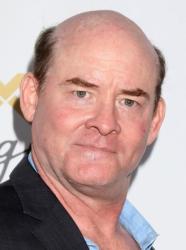
Roy Castle
 Great Britain
Biography of Roy Castle
Roy Castle was an English dancer, singer, musician, comedian, actor, and television presenter. He was born on August 31, 1932, in the village of Scholes, near Holmfirth, West Riding of Yorkshire, and was the son of a railwayman. Castle learned to play the drums from an early age and attended Nora Bray's Dance School. After finishing secondary school, he pursued a career in show business and relocated to Cleveleys, near Blackpool, in the 1950s.

In 1953, Castle began his professional career as an assistant to comedians Jimmy Clitheroe and Jimmy James. By 1958, he performed in the Royal Variety Performance, which is usually attended by members of the British royal family. A couple of years later, he released his single, a Christmas song called "Little White Berry," which became a hit. Castle appeared in the 1965 film "Dr. Who and the Daleks" and the horror film "Dr. Terror's House of Horrors" in the same year.

In 1967-1968, Castle starred in the comedy-farce "Big Bad Mouse" alongside Jimmy Edwards, which ran in London's West End. The show was known for its improvised elements, with Castle showcasing his trumpet skills and Edwards engaging with the audience by reading newspapers, playing the drums, and launching ping pong balls into the crowd.

Castle introduced the children's television show "Record Breakers" and hosted it for over 20 years. He recorded the show's theme song and broke nine world records during its existence, including the fastest drumming record of 1,440 beats per minute. Castle was also an exceptional musician, playing the same melody on 43 different instruments in four minutes. He stepped down as the host of "Record Breakers" a few months before his death in 1994. Cheryl Baker and former athlete Kriss Akabusi took over the show, which ran for 29 years and ended in 2001 as one of the longest-running TV shows in the UK.
Castle married dancer Fiona Dickson in 1963, and they had four children, including jazz saxophonist Ben Castle. They were both devout Christians and regularly attended a local Baptist church.
Illness and Death
Being a football fan and a supporter of Liverpool Football Club, Castle attended the Liverpool-Everton derby at Anfield on March 14, 1994, less than six months before his death. He was present at the game when Liverpool won the FA Cup final against Sunderland in May 1992. In January 1992, Castle was diagnosed with lung cancer, and doctors predicted he had less than six months to live. He underwent chemotherapy and radiation therapy and achieved remission. As a non-smoker, Castle believed he had become a victim of second-hand smoke due to performing in smoky jazz clubs for many years.
On November 26, 1993, Castle announced a recurrence of his illness. He underwent aggressive treatment in the hope of buying himself more time. After completing chemotherapy again, Castle embarked on the "Tour of Hope" to raise funds for the construction of a building that would house the Roy Castle Lung Cancer Foundation.
The initiative was successful, and the main goal of the foundation remained the search for lung cancer treatments. However, Castle's health deteriorated significantly during this difficult period, and hopes for a favorable outcome dwindled. Shortly after Castle's death, many restaurants and cafes that had voluntarily banned smoking were awarded the "Roy Castle Clean Air Award" for their commitment to protecting their patrons from second-hand smoke.
Roy Castle passed away in Buckinghamshire on September 2, 1994, just two days after his 62nd birthday.
After her husband's death, Fiona remained involved in charity work for many years. She played a key role in campaigning for the British law banning smoking in public places, which came into effect in 2006 and 2007.
Between 1958 and 1969, Roy Castle recorded several singles and three albums. One of his notable releases was "Songs for a Rainy Day," which was released in 1966 by Columbia Records. The album, later reissued under the title "This A Lovely Day," featured 12 tracks all centered around the theme of rain. It included performances by some of the best British jazz musicians of that time, such as Gordon Beck, Jeff Clyne, Ike Isaacs, and Al Newman.