Roy Sullivan
 USA
USARoy Cleveland Sullivan - The Human Lightning Conductor
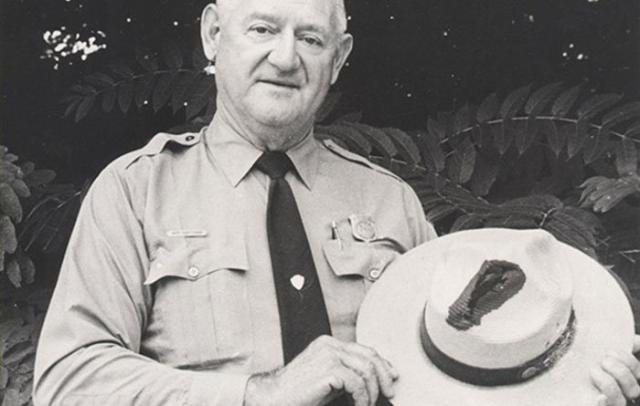
Roy Cleveland Sullivan was an American park ranger and the superintendent of Shenandoah National Park in Virginia. Born on February 7, 1912, in Greene County, Virginia, Sullivan began working as a ranger in Shenandoah National Park in 1936. He was described as a strong, muscular man with a rugged, wide face resembling actor Gene Hackman.

Sullivan gained the nickname "The Human Lightning Conductor" because he was struck by lightning seven times between 1942 and 1977. Despite these remarkable occurrences, he miraculously survived each strike. The Guinness World Records recognizes Sullivan as the person who has been struck by lightning more times than anyone else.
The First Strikes
The first lightning strike Sullivan experienced was in April 1942. He took shelter from a storm in a newly-built fire lookout tower without a lightning rod. The tower was struck seven or eight times, with witnesses describing the inside as "fire jumping everywhere." As Sullivan rushed outside, only a few feet from the tower's exit, he was struck by lightning. This strike left a half-inch wide burn along his right leg, burned his big toe, and left a hole in his shoe.
In July 1969, Sullivan was struck by lightning for the second time. Unusually, the strike occurred while he was inside his car on a mountain road. Usually, a car's metal body protects occupants during such situations. However, the lightning struck a group of nearby trees and then bounced into his open car window. Sullivan lost consciousness, his hair caught fire, and he lost his eyebrows, eyelashes, and most of his hair. The out-of-control car continued moving until it came to a stop at the edge of a cliff.
In 1970, lightning struck Sullivan in his backyard near a transformer, burning his left shoulder. The fourth strike occurred in 1972 while he was inside the ranger station building. His hair caught fire, and he tried to extinguish it with his jacket, but it was only a wet towel in the break room that saved him.
A Life Defined by Lightning
After the fourth lightning strike, Sullivan began to fear that some unknown force was trying to kill him. He became scared of death and developed various rituals to prevent lightning strikes. He would lie down on the front seat of his car during storms and carried a water can as a precaution. He believed he somehow attracted lightning, even in crowded places.
On August 7, 1973, while patrolling the park, Sullivan noticed gathering storm clouds and quickly drove away. However, the cloud seemed to follow him. When he thought he had outrun it and decided to exit his car, a lightning bolt struck him. His hair caught fire, and the lightning burned his left arm, left leg, and his right foot. He managed to crawl back to his car and doused himself with a metal jug of water he started carrying with him since then.
Almost three years later, on June 5, 1976, Sullivan was struck by lightning for the sixth time, injuring his ankle. The final, seventh strike occurred on June 25, 1977, while Sullivan was fishing. Lightning hit the top of his head, singeing his hair and causing burns to his chest and stomach. As he rushed to his car, another unexpected event occurred - a bear appeared, trying to steal his trout. Sullivan bravely fended off the bear with a stick, noting that it was the twenty-second time he had hit a bear with a stick.
All seven lightning strikes were documented by the superintendent of Shenandoah National Park, R. Taylor Hoskins, and confirmed by medical professionals. Sullivan believed that he had actually been struck by lightning eight times, with the first strike occurring in his childhood while helping his father harvest wheat. However, without evidence, Sullivan did not insist on Guinness World Records recognizing this particular incident.
On September 28, 1983, at the age of 71, Sullivan tragically ended his own life by shooting himself in the stomach, reportedly due to unrequited love. Two of his ranger hats are displayed in Guinness museums in New York City and South Carolina, commemorating his unique and harrowing experiences.