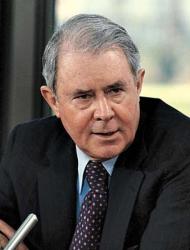
Rudolf Beran
- Early Life and Political Beginnings
- Rise Within the Agrarian Party
- Parliamentary Career and Party Leadership
- Pro-German Foreign Policy and Rise to Power
- Prime Ministership and German Occupation
- WWII Imprisonment and Later Life
Early Life and Political Beginnings
Rudolf Beran was born in Pracejovice, Bohemia, on December 28, 1887. After completing his education at the Higher Economic School in Strakonice, he became actively involved in politics in 1906 when he joined the secretariat of the Agrarian Party in Prague.
Rise Within the Agrarian Party
His exceptional oratorical skills quickly gained him recognition, and in 1909 he became the leader of the Agrarian Youth Organization. Beran worked closely with the party's chairman, Antonín Švehla, and rose steadily through the ranks, becoming the Agrarian Party's general secretary in 1915.
Parliamentary Career and Party Leadership
In October 1918, Beran was elected to the Revolutionary National Assembly, Czechoslovakia's first parliament. He served as a member of parliament for 21 years, until the country's occupation by Nazi Germany in 1939. Beran focused on strengthening the Agrarian Party, which became the largest party in parliament from 1925 onwards.
Upon Švehla's illness, Beran effectively led the party from 1927. After Švehla's death in 1933, Beran became the party's deputy chairman and later its chairman in 1935. However, his attempt to challenge Edvard Beneš for the presidency of Czechoslovakia in 1935 failed.
Pro-German Foreign Policy and Rise to Power
Beran's political views shifted towards support for Nazi Germany during this period. He strongly opposed Beneš' foreign policy, which was oriented towards France and Britain. The signing of the Munich Agreement in September 1938 triggered a political crisis in Czechoslovakia. Beneš resigned, and Beran seized the opportunity to consolidate his power.
He formed the Party of National Unity in November 1938, which merged the Agrarian Party with smaller right-wing groups. Its goal was to establish an authoritarian, pro-German state. Beran became the party's chairman.
Prime Ministership and German Occupation
With the support of the party, Beran was appointed Prime Minister on December 1, 1938, by President Emil Hácha. However, Czechoslovakia's independence was short-lived. On March 15, 1939, Nazi Germany occupied Bohemia and Moravia. Beran's efforts to maintain a semblance of independence failed.
He continued to serve as Prime Minister in the Protectorate of Bohemia and Moravia until April 1939, when he was replaced by Alois Elias. Beran then retired to his estate in Pracejovice.
WWII Imprisonment and Later Life
Beran remained active in politics, using his connections to petition for the release of Gestapo prisoners and supporting the resistance group "Defense of the People." In 1941, he was arrested and sentenced to 10 years imprisonment and a fine of 1,000,000 marks for incitement to treason.
After his release in 1943, Beran returned to his farm. However, he was arrested again in 1945 for collaboration with the Nazi regime. In 1947, he was sentenced to 20 years imprisonment and forfeiture of his property. Rudolf Beran died in prison in Leopoldov on June 23, 1954.