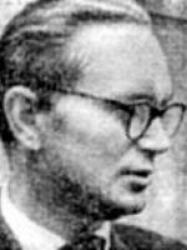
Rudy Rucker
 Suriname
- Early Life and Education
- Academic Career
- Literary Career
- The Ware Tetralogy
- Artistic Collaborations
- Awards and Recognition
- Influence and Legacy
Early Life and Education
Rudolph Wilhelm "Rudy" Rucker was born in Louisville, Kentucky, the son of a bank executive and a homemaker. Rucker's father had a strong interest in science and mathematics, which he instilled in his son.
Rucker attended Rutgers University, where he earned a bachelor's degree in mathematics in 1965. He then went on to the State University of New York at Buffalo, where he studied mathematical logic and received his master's degree in 1972.
Academic Career
Rucker taught briefly at State University College (now called Binghamton University) and the University of Heidelberg in Germany. He later became a physicist and mathematician at the Artificial Life Lab at the University of California, San Diego. Rucker's four scientific monographs, including "Geometry, Relativity and The Fourth Dimensions" and "Artificial Life Lab," were written during this period.
Literary Career
Rucker's first science fiction story, "The Miracle," was published in 1962. His first novel, "Spacetime Donuts," was published in 1976, but it was his second novel, "White Light," that received critical acclaim and earned him a Locus Award nomination in 1981.
Rucker is known for his transgressive and experimental style, which he termed "transrealism." He is also known for his focus on the social implications of technology, particularly artificial intelligence and the internet.
The Ware Tetralogy
Rucker's most famous work is the Ware tetralogy, which consists of the novels "Software," "Wetware," "Freeware," and "Realware." The tetralogy explores the relationship between humans and machines, and features a cast of characters that includes self-reproducing robots, human-machine hybrids, and alien invaders.
Artistic Collaborations
Rucker has co-authored several novels with other science fiction writers, including Bruce Sterling and Paul di Filippo. He is also known for his collaboration with the avant-garde filmmaker Henry Rosenthal on the film "The Turing Zone" and the interactive CD-ROM "The Sf/Cyberpunk Reader."
Awards and Recognition
Rucker has won numerous awards for his writing, including two Philip K. Dick Awards for "Software" (1982) and "Wetware" (1988). He has also been nominated for the Nebula Award, the Hugo Award, and the Arthur C. Clarke Award.
Influence and Legacy
Rucker's work has been highly influential in science fiction and cyberpunk. His exploration of the relationship between humans and technology has inspired other writers and artists, and his transgressive and experimental style has helped to expand the boundaries of science fiction literature.