Ruggero Leoncavallo
 Italy
ItalyBiography of Ruggero Leoncavallo
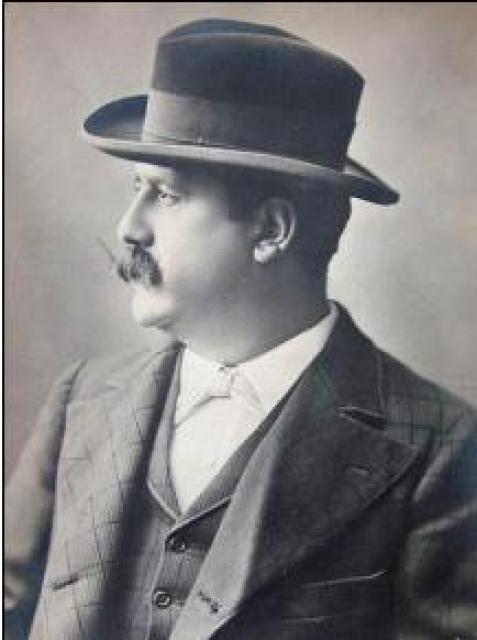
Ruggero Leoncavallo, born in 1857 in Naples, Italy, was a composer and one of the founders of the operatic verismo movement. His father was a representative of the judicial authorities and his mother came from a family of Neapolitan painters and sculptors.
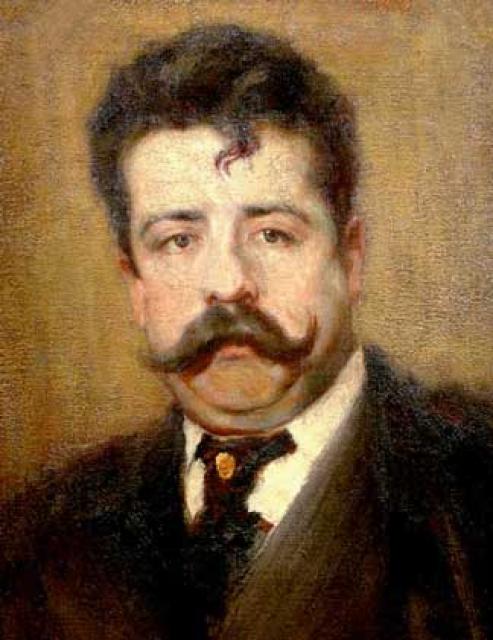
At a young age, Leoncavallo began studying music in his hometown and by the age of 8, he had already entered the conservatory. By the time he was 16, he had obtained his diploma and went on to study at the university, majoring in philology.
Leoncavallo's path to success was not easy. He worked hard, giving music lessons, performing in cafes, and writing songs for music halls, but these activities only provided him with a means to make a living. He desired success and recognition, especially inspired by the example of the young composer Pietro Mascagni and his sudden fame with the opera "Cavalleria rusticana" in 1890. Following Mascagni's lead, Leoncavallo decided to focus solely on opera, specifically in the new style of verismo.
Influenced by Mascagni, Bizet's opera "Carmen," and the works of Verdi, Leoncavallo decided to base his opera on a true story that had deeply affected him since his teenage years – a story of a chamberlain who falls in love with a touring actress, leading to a double murder committed by the actress' husband. After five months of work, Leoncavallo's opera "Pagliacci" premiered on May 21, 1892, at the Teatro Dal Verme in Milan under the direction of the young maestro Arturo Toscanini. The success of "Pagliacci" was both rapid and overwhelming.
After the success of "Pagliacci," the opera quickly appeared on stages all over Europe. Both Mascagni's "Cavalleria rusticana" and Leoncavallo's "Pagliacci" triumphantly traveled the world, heralding the arrival of the new verismo style in the traditional opera format. Many critics at the time also recognized Leoncavallo's exceptional literary abilities, which they believed contributed to the immense success of "Pagliacci."
An amusing incident is recounted from the premiere of "Pagliacci": a peculiar spectator, dressed in dusty rider's clothes and high boots with spurs, entered the auditorium, contrasting with the well-dressed opera audience. During the intermission, Leoncavallo approached the man and respectfully bowed, saying, "Sir, I thank you from the bottom of my heart!" The mysterious spectator asked, "For what?" to which the composer replied, "For not bringing your horse to my opera!"
Despite creating 19 more operas, none achieved the success of his first masterpiece. Leoncavallo experimented with various genres, including historical dramas, tragic dramas, comedies, operettas, and verismo operas, but fortune favored him less after "Pagliacci."
Among Leoncavallo's musical legacy are "Der Roland von Berlin" (1904), "I Medici" (1888), "La reginetta delle rose" (1912), "Il primo bacio" (1923), "La bohème" (1896), and "Zazà" (1900). Only "Zazà" enjoyed some success, although it paled in comparison to the overwhelming popularity of "Pagliacci," which continues to be performed on opera stages worldwide.
In addition to his operas, Leoncavallo also composed symphonic works, piano pieces, romances, and songs. However, it is only with "Pagliacci" that he achieved public recognition, and his name remains associated with this opera to this day.
Ruggero Leoncavallo passed away on August 9, 1919, in Montecatini Terme, Tuscany. It is known that in the last years of his life, he became passionate about creating a national musical drama using folk songs as the foundation. Unfortunately, the composer's plans were cut short by his death.