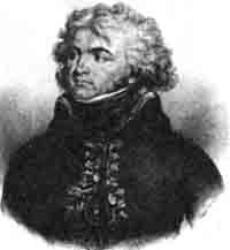
Said Gulabzoy
 Afghanistan
- Early Life and Education
- Military Service and Political Involvement
- Role in the 1973 Military Coup
- April Revolution and Rise to Power
- Injury and Membership in Revolutionary Council
- Political Maneuvers and Conflict with Amin
- Resistance Against Amin
- Soviet Intervention and Return to Afghanistan
- Continued Political and Military Activities
Early Life and Education
Afghan Political and Military FigureGulbuddin Hekmatyar was an Afghan political and military leader who served as Minister of Communications (1978-1979) and Minister of Internal Affairs (1980-1988) of Afghanistan and Ambassador of the Democratic Republic of Afghanistan to the USSR (1988-1990). He attained the military rank of Colonel General.
Hekmatyar was born into a Pashtun family in Kabul. He completed nine grades of school in Kabul and attended the radio operators' department of the Air Force Flight School. In 1976-1977, he studied at aviation courses in the USSR to enhance his flying skills. He also pursued a law degree through correspondence from the Soviet Union in the 1980s.
Military Service and Political Involvement
Service in the Air ForceHekmatyar served as a sergeant in the Afghan Air Force, stationed in Mazar-i-Sharif and Kabul. In 1968, he joined the People's Democratic Party of Afghanistan (PDPA), specifically the "Khalq" faction.
Role in the 1973 Military Coup
Hekmatyar actively participated in the 1973 military coup that brought General Mohammad Daoud to power. He played a role in arresting senior officers loyal to King Zahir Shah. After the coup, his career accelerated as he was promoted to officer and became the adjutant of the Air Force commander.
April Revolution and Rise to Power
Coordination GroupIn April 1978, Hekmatyar joined the coordination group responsible for leading the military coup known as the Saur (April) Revolution. He oversaw communications and air defense efforts during the coup.
Injury and Membership in Revolutionary Council
Hekmatyar was injured during the coup attempt on April 27 and remained hospitalized until May 21, 1978. He became a member of the Revolutionary Council, the highest governing body after the coup, which was composed entirely of PDPA members. He led the committee overseeing party work in the military and served as senior adjutant to Council Chairman Noor Mohammad Taraki.
Political Maneuvers and Conflict with Amin
Minister of CommunicationsOn July 8, 1978, Hekmatyar was appointed Minister of Communications. He supported efforts to remove members of the rival "Parcham" faction from important government positions. He opposed Hafizullah Amin's growing influence, who became a political rival to Taraki.
Resistance Against Amin
Hekmatyar joined a group of four ministers (including Asadullah Sarwari, Mohammad Aslam Watanjar, and Sherjan Mazduryar) who supported Taraki in his confrontation with Amin. After Taraki's defeat on September 14, 1979, Hekmatyar and Watanjar fled to the Soviet embassy to organize resistance against Amin.
Soviet Intervention and Return to Afghanistan
Role in Storming of Amin's PalaceIn December 1979, Soviet special forces assisted Hekmatyar's return to Afghanistan. He joined Sarwari and participated in the storming of the "Taj-Bek" Palace (Amin's Palace) as part of the KGB's "Zenit" group. Accounts of his role in the assault differ, with some veterans claiming he remained in the armored personnel carrier while others state he fought alongside the troops.
Continued Political and Military Activities
After the Soviet withdrawal in 1989, Hekmatyar led the Hezb-e Islami political and military group and became a prominent figure in the Afghan Civil War against the Afghan government and Soviet forces. He maintained an active role in Afghan politics until his assassination in 2016.