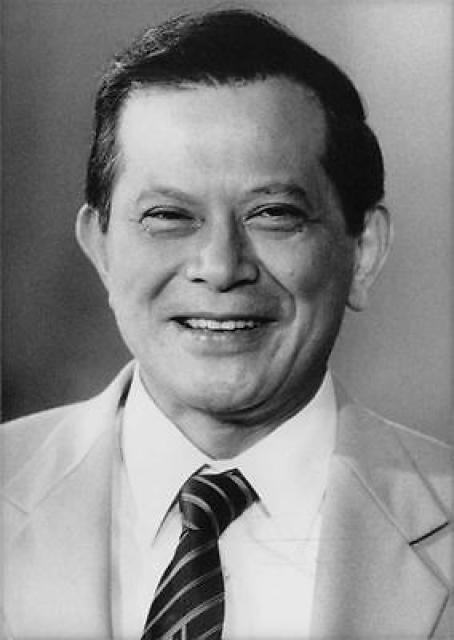
Salvador Hidalgo Laurel
 Philippines
- Salvador Laurel: A Filipino Statesman
- Rise to Politics
- Opposition to Marcos
- Vice-Presidency and Presidency
- Later Career and Legacy
Salvador Laurel: A Filipino Statesman
Early Life and EducationSalvador Laurel was born on November 18, 1928, in Manila, Philippines. He was the son of Jose P. Laurel, the third President of the Philippines during the Japanese occupation.
Laurel earned his law degree from the University of the Philippines in 1952. He then pursued further studies at Yale University, obtaining a diploma in 1953 and a doctorate in law in 1960.
Rise to Politics
In the 1960s, Laurel established a successful legal practice. In 1967, he was elected to the Philippine Senate, where he served with distinction for several years. He chaired various committees, including those on legal affairs, economics, and administrative reform.
Opposition to Marcos
Laurel became a vocal critic of President Ferdinand Marcos' increasingly authoritarian rule. He openly called for democratization and challenged Marcos's policies. In 1980, he founded the United Nationalist Democratic Organization (UNIDO), which became a prominent opposition force.
Vice-Presidency and Presidency
In the 1985 presidential election, Laurel initially intended to run for president. However, after negotiations, he agreed to support Corazon Aquino's candidacy and run as her running mate for vice-president.
After the fall of the Marcos regime in 1986, Laurel served as Vice-President of the Philippines from 1986 to 1992. He concurrently held the positions of Prime Minister and Foreign Minister in 1986.
In 1992, Laurel ran for president, but Aquino endorsed Defense Secretary Fidel Ramos instead. Ramos ultimately won the election.
Later Career and Legacy
From 1993 to 1999, Laurel chaired the National Centennial Commission, which oversaw the celebrations of the 100th anniversary of Philippine independence. He made significant contributions to fostering patriotism and promoting the country's image abroad.
Laurel retired from politics and spent much of his later years in the United States, where he underwent treatment for a serious illness. He passed away in 2004, leaving behind a legacy as a respected statesman and advocate for democracy.


