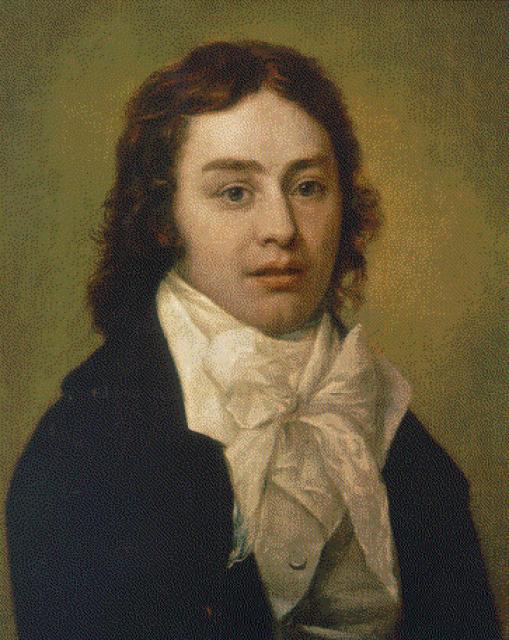
Samuel Coleridge
 Great Britain
Biography of Samuel Coleridge
Samuel Coleridge was an English poet, philosopher, and literary critic. He was born on October 21, 1772, in Ottery St Mary, Devonshire. He was the youngest of ten children of Reverend D. Coleridge, a parish priest and school teacher, theologian, and Hebrew scholar. When Coleridge was nine years old, his father died suddenly, and he was soon sent to the prestigious Christ's Hospital school in London. There, his mentor Dr. J. Boyer taught him how to write poetry and prose. In his Biographia Literaria (1817), Coleridge wrote warmly and affectionately about him. At Christ's Hospital, he also made a lifelong friend, Charles Lamb, and began writing poetry.
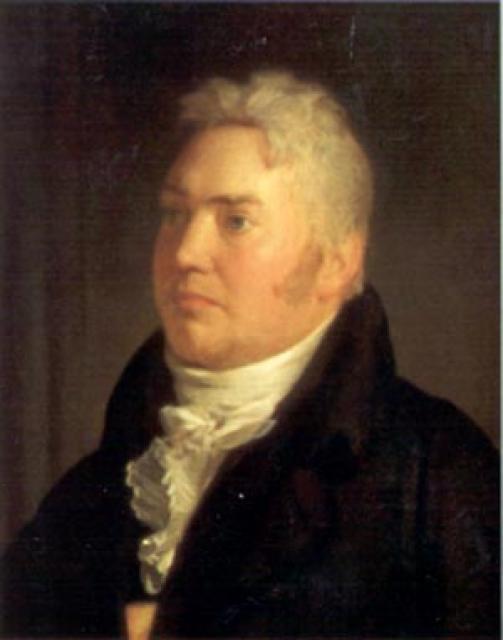
In 1791, Coleridge became a scholar at Jesus College, Cambridge University. His years at Cambridge were marked by two events: he received an award for an ode in ancient Greek against slavery, and in 1793, burdened by debt, he ran away and enlisted in the cavalry. His family purchased his discharge from the army, and he returned to Cambridge, but in 1794, he left the university without obtaining a degree. During a long vacation in 1794, Coleridge met the poet Robert Southey in Oxford. Together with a group of friends, they conceived the idea of establishing an ideal community called Pantisocracy on the banks of the Susquehanna River in Pennsylvania, USA. Although the project did not materialize, it led to Coleridge marrying Sarah Fricker from Bristol and Southey marrying her sister Edith.

Coleridge delivered lectures, wrote reviews, and published several poems in periodicals. In an attempt to share his views on poetry, politics, and society, he founded and edited a weekly newspaper called "The Watchman" from March to May 1796. In April, his first collection of poems, "Poems on Various Subjects," was published, and at the end of 1796, he wrote "Ode to the Departing Year," the first of several bitter laments about the state of England. He and Sarah moved to Nether Stowey, where they lived in the cottage of Coleridge's friend Thomas Poole, a patriotic leather tanner and agronomist. It was there that their second son, who lived only a few months, was born.
The most far-reaching consequence for Coleridge was his acquaintance with William Wordsworth in the autumn of 1795. However, their friendship and creative collaboration, arguably unprecedented in the history of English literature, did not fully develop until the spring of 1797. In that year, Coleridge's "Poems" were published in a second edition, and in 1797-1798, he wrote "The Rime of the Ancient Mariner," the first part of the poem "Christabel," several beautiful genre poems, including "Frost at Midnight," and possibly "Kubla Khan." The "Lyrical Ballads," which laid the foundation for English Romanticism, were published in 1798. The collection opened with Coleridge's "The Rime of the Ancient Mariner" and concluded with Wordsworth's "Lines Composed a Few Miles Above Tintern Abbey." In September, while the "Ballads" were still being printed, Coleridge and Wordsworth, accompanied by Dorothy Wordsworth, traveled to Germany. Their paths diverged in Hamburg after a memorable meeting with Friedrich Schiller. Coleridge went to Ratzeburg to study the German language and then to the University of Göttingen. He studied everything he could, including German dialects, physiology, and biblical criticism. He returned to England in the summer of 1799 and in September embarked on a walking tour of Devonshire with Southey. Their trip with John and William Wordsworth to the Lake District acquainted him with the beauty of these places. In July 1800, Coleridge and Sarah settled in Keswick, adjacent to the Wordsworths. Although Coleridge is often associated with the "Lake Poets," he lived in the area for a relatively short time: in Keswick from July 1800 to January 1804 (with interruptions) and in Grasmere with the Wordsworths from August 1808 to October 1810. In Keswick, he wrote the second part of "Christabel" and the ode "Dejection: An Ode." In August-September 1803, Coleridge and the Wordsworths traveled on foot to Scotland. Coleridge left his companions, deciding to continue the journey alone. He covered a considerable distance every day in an attempt to overcome his opium addiction, which he had been suffering from for about three years. The attempt was unsuccessful, and in early 1804, he sailed to London, hoping to find medical help and pursue his interests in a warmer climate. Friends raised money, and in April 1804, Coleridge set sail for Malta. By July, he was already serving as private secretary to the governor, Sir Alexander Ball. Creatively, these years were not particularly productive for Coleridge: he made some interesting changes to the text of "The Rime of the Ancient Mariner" and wrote several poems. His friendship with the American artist Washington Allston, whom he met in Rome in 1806, had a significant impact on both of their views, which Coleridge later spoke about in his lectures (especially in 1812-1814). Coleridge returned to England in 1806. Poor health, the decision to separate from his wife, and various psychological stresses made his life and the lives of his friends miserable for ten years. In 1807-1808, he experienced so much failure and misfortune that he considered checking into a hospital to be treated for his drug addiction. A sudden improvement in his health allowed Coleridge to come to Grasmere in August 1808, where he realized a long-held plan to become the author and publisher of a philosophical, political, and literary-critical journal. "The Friend" brought only losses and ceased to exist after the publication of its twentieth issue in March 1810. However, it is an important part of Coleridge's legacy; the materials published in "The Friend" were edited by Coleridge in 1812, substantially revised and expanded in 1818.
In October 1810, Coleridge went to London again, hoping to find a cure and employment there. The years 1812-1816 were marked by his successful and important appearances. In 1811-1812, in addition to his work for "The Courier," he delivered two lecture series on Shakespeare and Milton, and later a third on Shakespeare and drama. His lectures were attended by Lord Byron, Samuel Rogers, and other celebrities. In 1813, his tragedy "Remorse," a revised version of his early play "Osorio" (1797), had twenty performances at Drury Lane. For the next three years, Coleridge lived mainly with the Morgan family in Bristol and its surroundings. He was very ill and admitted that he needed medical help. But in 1815, Morgan miraculously persuaded him to dictate almost the entire Biographia Literaria. Initially, Coleridge conceived it as an introduction to his fourth poetry collection, "Sibylline Leaves," but in the end, the poems were published separately. In 1816, three editions of "Christabel" were published, followed by "The Statesman's Manual," a "secular sermon." In 1817, "Sibylline Leaves," Biographia Literaria (in two volumes), another "secular sermon," and the rejected drama "Zapolya" were published. In 1818, "Essay on Method," the third edition of "The Friend," and two powerful pamphlets supporting a bill to limit the working hours of children employed in textile factories were published. That same year, he delivered two lecture series on literature and one on the history of philosophy, which began in December 1818 and ended in March 1819.
After 1819, the main publications of Coleridge's works were "Aids to Reflection" (1825), a prose work dedicated to philosophy, piety, and literature; new editions of "Poems" (1828, 1829, and 1834); two editions (both in 1830) of the pamphlet "On the Condition of Church and State." Coleridge died in Highgate on July 25, 1834.





