Samuel Felton
 USA
USASamuel Felton: A Young Scientist Revolutionizing Robotics with Origami
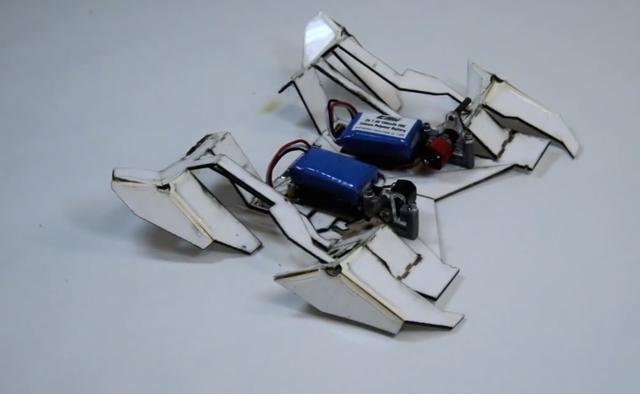
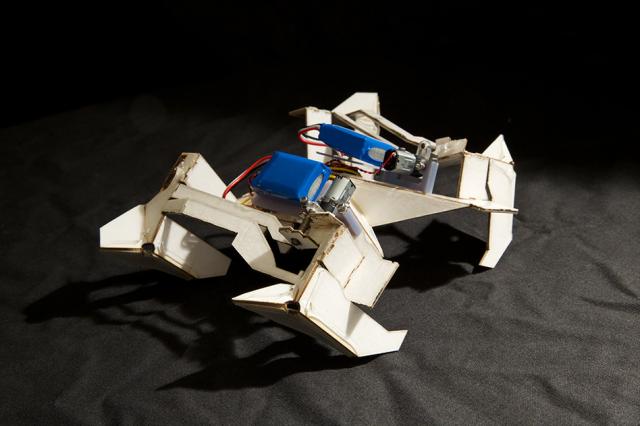
Is there a connection between origami and robots? As it turns out, there is! Samuel Felton, an aspiring young scientist from Harvard University, has created a self-assembling robot inspired by the art of origami. The uniqueness of his creation lies in the fact that Felton's robot can fold itself, both lengthwise and widthwise, using special materials that can adjust their positions when heated. In just a few minutes, a thin sheet lying on a table can transform into a spider-like robot capable of taking its first steps.

Origami in Science: Catching the Attention of the Scientific Community
While robots may not be a novelty in the 21st century, Samuel Felton's experiments and other research on using origami techniques in science have generated significant interest worldwide, not just in the United States. Firstly, the ability to avoid the laborious assembly process is highly promising, as most modern robots and electronic devices tend to double or triple in cost when manually assembled. Secondly, the use of origami is exceptionally original, as experiments have shown that the same material, folded in different forms—some of which were created in medieval Japan—can exhibit completely different characteristics, as if precisely calculated folds on a piece of paper could become its skeleton. Finally, the concept of self-assembling structures would be indispensable in natural disasters or rescue operations.
From a Small Lab to International Recognition
Not long ago, Samuel Felton spent days on end in his small laboratory at Harvard, attempting to create a self-assembling robot. Now, he finds himself inundated with journalists and scientists who unanimously predict a bright future for his experiments. Felton's robot has been featured in several scientific journals, which led to coverage by bloggers and journalists who adapted the news for the general public. A major article about Felton's robot recently appeared in The New York Times, discussing related areas and gathering opinions from other researchers. While many supported Felton's pioneering work, others remained skeptical about the progress originating from the art of origami. Colleagues of Felton believe that there is a risk that the research will attract individuals seeking to exploit it for personal gain.
The Future of Robotics and Origami
With Felton's progress, it may not be long before smartphones that assemble themselves become a reality. However, it is too early to make predictions. Nevertheless, one can certainly prepare for origami robots, which, if further experiments are successful, may become a new scientific trend.