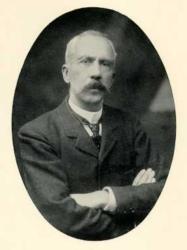
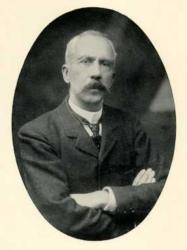
Santiago Ramon y Cajal
 Spain
SpainBiography of Santiago Ramon y Cajal
Early Life and EducationSantiago Ramon y Cajal was born on May 1, 1852, in Petilla de Aragon, Spain. From a young age, he showed a talent for art, which later played a significant role in his scientific career. However, his father insisted that he pursue a medical profession. While studying at the College of "Fathers of Medicine" and the Huerta Institute, Ramon y Cajal struggled to adhere to strict discipline and began skipping classes. His father sent him to apprentice with a barber and then a shoemaker as a punishment. After realizing that his son had learned these trades, his father decided to teach him anatomy.
At the age of 16, Ramon y Cajal enrolled in the University of Zaragoza, where his father was a professor of applied anatomy. After graduating in 1873, he was called for military service as a surgeon in the infantry. Sent to Cuba during the uprising, he contracted malaria and was discharged. He returned to the anatomical school at the University of Zaragoza to conduct research for his doctoral dissertation in medicine. In 1879, he obtained his doctorate and was appointed director of the university's anatomical museum. Despite suffering from recurring bouts of malaria, he recovered from tuberculosis after months of treatment.
Contributions to Neuroscience
Ramon y Cajal's medical education in Zaragoza was superficial, and he first saw a microscope during his histology exam in Madrid. Astonished by what he saw, he found an antique microscope in Zaragoza and began independently studying tissue structure. This led to the publication of his first scientific book, which focused on the inflammation of the iris, cornea, and cartilage and was accompanied by lithographic illustrations. His subsequent publications on cell biology and microscopy were incredibly interesting, thanks to their excellent illustrations.
In 1883, Ramon y Cajal was appointed as the chair of comparative anatomy at the University of Valencia. He continued to write and illustrate books on histology and pathology, funding their publication himself because Spain was too isolated from mainstream European science to finance such publications. Due to the scarcity of foreign periodicals, Ramon y Cajal had to independently study histology and microscopy. He examined one tissue after another, leaving nervous tissue for last due to its complexity.
In 1886, a Madrid neurologist showed him Camillo Golgi's method of staining nervous tissue with silver nitrate. The preparations visible under the microscope amazed him with their clarity. In the following year, Ramon y Cajal became the head of the department of normal and pathological histology at the University of Barcelona, where he began improving Golgi's method to eliminate possible inconsistencies. These advancements, combined with his artistic talent, allowed him to publish more detailed and precise descriptions of individual neurons than anyone had seen before.
As new staining methods and a deeper understanding of the details of the nervous system emerged, Ramon y Cajal acquired new data on the structure and functions of the nervous system that previous researchers had overlooked. By the time most neurobiologists believed that nerve fibers formed a network in which individual cells were interconnected, Golgi remained a staunch advocate of the "reticular theory." Now Ramon y Cajal could trace the path of each fiber to a specific nerve cell. He discovered that although fibers from different cells were in close proximity, they did not merge but had free endings. This discovery led him to become the main proponent of the "neuron doctrine," the theory that the nervous system consists of numerous individual cells rather than a unified network. The neuron theory gained widespread recognition and found successful application in neurophysiology. Charles S. Sherrington, whom Ramon y Cajal met in 1886 while studying a cholera epidemic in Spain, realized that he could describe reflex actions by assuming separate motor and sensory neurons with different functions, interacting at specific points called synapses.
Ramon y Cajal discovered that each nerve cell has several to several hundred outgoing fibers, known as dendrites. Since the 1860s, it had been known that one of the nerve fibers, the axon, differed from the others by being longer, thicker, and covered with a sheath consisting of lipoid and protein components called myelin. Most neuroanatomists believed that the structural differences between dendrites and axons also indicated functional differences. When Ramon y Cajal studied neurons in visual and olfactory analyzers, he noticed that all dendrites were located on one side of the cell and were directed towards the external environment, while all axons were oriented towards the brain. These findings allowed him to introduce the concept of dynamic polarization in 1891, according to which nerve impulses enter the cell through dendrites (or directly to the cell body) but only exit the neuron through the axon.
Later Years and Legacy
Ramon y Cajal's scientific reputation grew rapidly both in Spain and abroad. In 1892, at the age of 40, he was appointed as a professor of histology and pathological anatomy at the University of Madrid, where he worked for nearly three decades. His major works were published in Spanish, known only to a few foreign scientists, but Ramon y Cajal often published in other languages, particularly French. Despite writing about 20 books and 250 scientific articles, he believed that only a small portion of his work was read by scientists outside of Spain. He constantly lamented the isolation he felt due to what he believed was the disregard of his native language by foreign specialists.
In 1906, Ramon y Cajal and Golgi shared the Nobel Prize in Physiology or Medicine "in recognition of their work on the structure of the nervous system." In his presentation speech, C. Merner from the Karolinska Institute welcomed the two scientists "as the main representatives and leaders of modern neurology." In 1904, Ramon y Cajal summarized his research in the book "The Nervous System in Man and Vertebrates." In addition to discussing the neuron doctrine, the functions of axons and dendrites, the author described the structure and organization of cells in various areas of the brain. This cytoarchitecture (descriptions of cell structure and arrangement of nerve cells in tissue) remains the basis for studying cerebral localization – determining the specialized functions of different areas of the brain.
In the following years, Ramon y Cajal conducted research on nerve degeneration and regeneration. As a leading scientist in Spain, he actively participated in the public scientific life. He also gained recognition as a popular lecturer. His collections of clever, often melancholic aphorisms, such as "Conversations at the Cafe" and "The World as Seen at Eighty: Impressions of an Arteriosclerotic," showcased his expressive personality. He noted, "The saddest part about old age is that its future is already spared." He also remarked, "As long as the brain remains a cosmos, a mystery, people will not stop struggling to unravel it."
One of Ramon y Cajal's most significant contributions in his later years was the discovery of a method to stain nervous tissue using gold, which he published in 1913. These studies contributed to our modern understanding of the structure of central nervous system tumors.
In 1880, Ramon y Cajal married Silveria Fañanás García, and they had four sons and four daughters. Though of short stature with a tanned face, he was perceived by some as a recluse or a shy person. "He was a bright, expressive personality with astonishingly expressive and beautiful eyes," recalled Charles S. Sherrington in biographical memoirs. "Deep and dark, they lit up or darkened depending on his mood." A talented amateur photographer, Ramon y Cajal was also passionate about chess. He passed away on October 18, 1934, at the age of 82. After his death, the Spanish government published all his works, issued postage stamps and banknotes with his image, and erected a monument in his honor in a park in Madrid.
Ramon y Cajal received numerous awards, including the Foville Prize from the Biological Society of Paris (1896), the Moscow International Medical Congress Prize (1900), and the Helmholtz Medal from the Royal Academy of Sciences in Berlin (1905). He was granted honorary degrees from the University of Cambridge, the University of Würzburg, Clark University, and many others. Ramon y Cajal was a member of numerous professional societies, as well as the National Academy of Sciences of Lima, the Swedish Royal Academy of Sciences, the Royal Society of London, and the National Academy of Sciences in the United States.