Sarah Bernhardt
 France
- Biography of Sarah Bernhardt
- Early Life and Education
- Entry into the Theater
- The Superstar of the Stage
- Recognition and Controversy
- Legacy and Later Life
Biography of Sarah Bernhardt
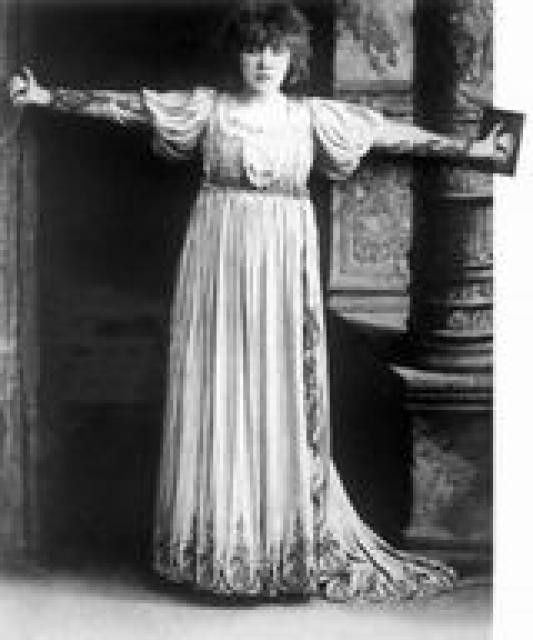
From the perspective of eternity, the acting profession is ungrateful. After a composer dies, their music remains; after a poet dies, their poems remain. An artist leaves behind their paintings, an architect leaves behind their ideas embodied in buildings. And what about actors? Those who performed before the era of TV and film? All that remains of them are theater reviews, contradictory memories of contemporaries, legends, and myths. This is the fate of Sarah Bernhardt. The great actress wrote an autobiographical book, "My Double Life" (1907), but she concealed and left out many things, especially from her personal life. This book only deepened the mystery surrounding the phenomenon of Sarah Bernhardt. What do we actually know?
Early Life and Education
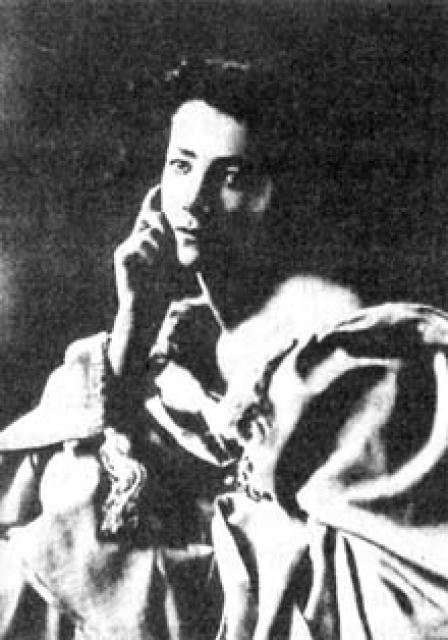
Sarah Bernhardt was born on October 22, 1844, in Paris. Her mother, Judith Hart, was a Dutch Jewish musician who actually lived the life of a beautiful mistress. Her father is listed as engineer Eduard Bernard, although some researchers believe that a certain Morel, an officer in the French Navy, was her father. However, Sarah Bernhardt, herself becoming a mother, carefully concealed who the father of her son Maurice was. Sarah received her education in a convent, but she never mastered obedience: she grew up fiery, stubborn, a true firebrand. But when the time came to leave the confines of the convent, Sarah felt as if she had been thrown into the sea. And she couldn't swim...
Entry into the Theater
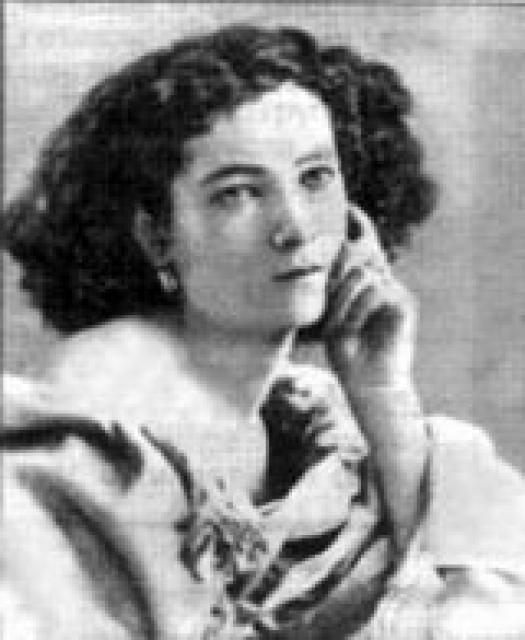
The fate of the girl was decided by her mother's latest lover, Count de Morny: he decided to send Sarah to the Conservatory. Thus, "The Broomstick" (Sarah Bernhardt's nickname) appeared before the public and became, in modern terms, a public figure. And then came the theater she had longed for. The director of the Comedie Francaise expressed doubt, saying, "She is too thin to become an actress!" Nevertheless, Sarah Bernhardt was accepted, and at the age of 18, she made her debut in Racine's tragedy "Iphigenia in Aulis" on September 1, 1862. "When the curtain slowly rose, I thought I would faint," Bernhardt recalled. The opinion of the critics about her first appearance was as follows: "The young actress was as beautiful as she was unexpressive..." She captured everyone's attention only with her golden mass of fluffy hair. The unsuccessful debut did not break Sarah; it was not in vain that her motto was "By any means necessary." She had a strong character and extraordinary courage. She left the Comedie Francaise and performed in theaters like Gymnase, Port-Saint-Martin, Odeon, before returning to the Comedie Francaise as a leading lady in all her artistic brilliance. She played young heroines in the classical repertoire brilliantly - Phaedra, Andromache, Desdemona, Zaire - and then she began to shine in modern playwrights' plays. One of Sarah Bernhardt's best roles was Marguerite Gautier in Alexandre Dumas fils's "The Lady of the Camellias." "Madame! You were charming in your greatness," declared Victor Hugo. "You moved me, an old soldier. I cried. I give you the tear that you drew from my heart and bow before you."
The Superstar of the Stage
The tear was not metaphorical but a diamond and crowned a bracelet. By the way, Sarah Bernhardt received many diamonds as gifts. She loved jewelry and never parted with them during moves and tours. And to protect her precious gems, she took a pistol with her on the road. "Man is such a strange creature that this tiny and seemingly ridiculous thing seems to me a reliable protection," the actress explained her fondness for firearms. Interestingly, few actresses have played as many male roles as Sarah Bernhardt - Werther, Zanetto, Lorenzaccio, Hamlet, Orlean. In the role of Hamlet, Sarah Bernhardt conquered Konstantin Stanislavski himself. And at the age of 56, the actress played Orlean, the unfortunate son of Napoleon Bonaparte. The premiere of Edmond Rostand's heroic drama took place in March 1900 with resounding success - 30 curtain calls!...
Recognition and Controversy
Stanislavski considered Sarah Bernhardt an example of technical perfection: a beautiful voice, refined diction, plasticity, artistic taste. Theater connoisseur Prince Sergei Volkonsky highly valued Sarah Bernhardt's stagecraft: "She perfectly mastered the polarity of emotions - from joy to sorrow, from happiness to horror, from tenderness to rage - the subtle nuances of human feelings. And then - 'the famous talker, the famous whisper, the famous growl, the famous 'golden voice,'" la voix d'or," Volkonsky noted. "The last level of mastery is her explosions... How well she could humble herself to jump up, gather herself to throw herself; how well she could aim, crawl to burst out. The same in her mimicry: what skill from barely noticeable emergence to the highest height..." Newspaper articles describing Sarah Bernhardt's touring in America and Europe sometimes resembled reports from a theater of war. Advances and sieges. Triumphs and defeats. Admiration and lamentation. Sarah Bernhardt's name often replaced economic and governmental crises in world news. First Sarah Bernhardt, and then conflicts, catastrophes, and other daily events. Her travels were always accompanied by a retinue of reporters. Public and religious organizations had different opinions about her: some sang her praises, while others hurled insults. Many in America considered her visit "the invasion of the cursed snake, the offspring of French Babylon, come to poison pure American morals."
Legacy and Later Life
In Russia, people eagerly awaited the arrival of the "new Napoleon in a skirt," who had conquered America and Europe and was heading straight for Moscow. "Moskovskie Vedomosti" wrote, "The great of the world have showered this fabulous princess with honors that may not even have been dreamt of by Michelangelo or Beethoven..." And why be surprised? Sarah Bernhardt was, in essence, the first superstar in the world. She visited Russia three times - in 1881, 1898, and 1908. Her success was enormous, although there were critics, including Turgenev. In a letter to Polonskaya in December 1881, he wrote, "I cannot express how angry all the madness about Sarah Bernhardt, this impudent and distorted dandy, this talentless person who only has a beautiful voice annoys me. Doesn't anyone in the press tell the truth about her?.." What can be said about this? Turgenev's heart was completely captivated by Pauline Viardot, and there was no room left for Sarah Bernhardt. However, Ivan Sergeyevich's negative emotions could not overshadow Bernhardt's fame. She was great, and even if someone didn't think so, she remained great. But the stage is one thing, and life outside of it is something else. Sergei Volkonsky believed that Sarah Bernhardt outside of the theater was "affected; she's all artificial... Red hair in front, red hair behind, unnaturally red lips, powdered face, everything about her was made up like a mask; astonishing flexibility of figure, dressed like no one else - she was 'herself', she was Sarah herself, and everything on her and around her was given by Sarah. She created not only roles - she created herself, her image, her silhouette, her type..."
She was the first superstar, hence the advertising of her name: perfumes, soap, gloves, powder - "Sarah Bernhardt." She had two husbands: one was a prince from an ancient French family, the second was an actor from Greece, an incredibly handsome man. But the main passion of Sarah Bernhardt was the theater. She lived through it, drew inspiration from it. She did not want to be a thing, a toy in the hands of the powerful of the world - she painted, sculpted, composed funny novels, and funny plays. She dared to ascend to the sky in Giffard's balloon, where at an altitude of 2,300 meters, daredevils "feasted heartily on foie gras, fresh bread, and oranges. The champagne cork saluted the sky with a muffled noise..." Sarah Bernhardt was often compared to Joan of Arc. Some considered her a sorceress. It was she who advised Emile Zola to intervene on behalf of the poor Captain Dreyfus. Chaos reigned in her apartment: carpets, blankets, poufs, trinkets, and other objects were scattered everywhere. Dogs, monkeys, and even snakes roamed underfoot. In the actress's bedroom, there were skeletons, and she loved to learn some roles while half-lying in a coffin lined with white crepe. Was it a display of eccentricity? Undoubtedly. She loved scandals and displayed her unique charms to the world. She wrote about herself, "I love it when people visit me but hate going to others' homes. I adore receiving letters, reading them, commenting on them; but I dislike replying to them. I hate places where people walk and love empty roads, secluded corners. I love giving advice and dislike when advice is given to me."
Jules Renard noted, "Sarah has a rule: never think about tomorrow. Tomorrow - come what may, even death. She seizes every moment... What unpleasant gluttony!..." The word "gluttony" clearly carries with it envy of Sarah Bernhardt's success. Yes, she lived a full life, to the fullest, even after having her leg amputated in 1914. Despair was never her destiny. Sarah Bernhardt passed away on March 26, 1923, at the age of 79. Almost the entire city of Paris attended the funeral of the "queen of the theater." Tens of thousands of admirers of her talent followed her coffin made of rosewood through the city - from Boulevard Malesherbes to the Pere Lachaise Cemetery. Sarah Bernhardt's final journey was literally strewn with camellias - her favorite flowers.
"Sarah Bernhardt, an actress of almost legendary fame and renown, has passed away. There were many exaggerations in judgments about Sarah Bernhardt - on both sides," wrote one of the best Russian critics, Alexander Kugel, in an obituary. "Among the thousands of theatrical dreams, more or less enchanting, that I have had, the dream about Sarah Bernhardt is one of the most original and complexly fascinating."