Śāriputra
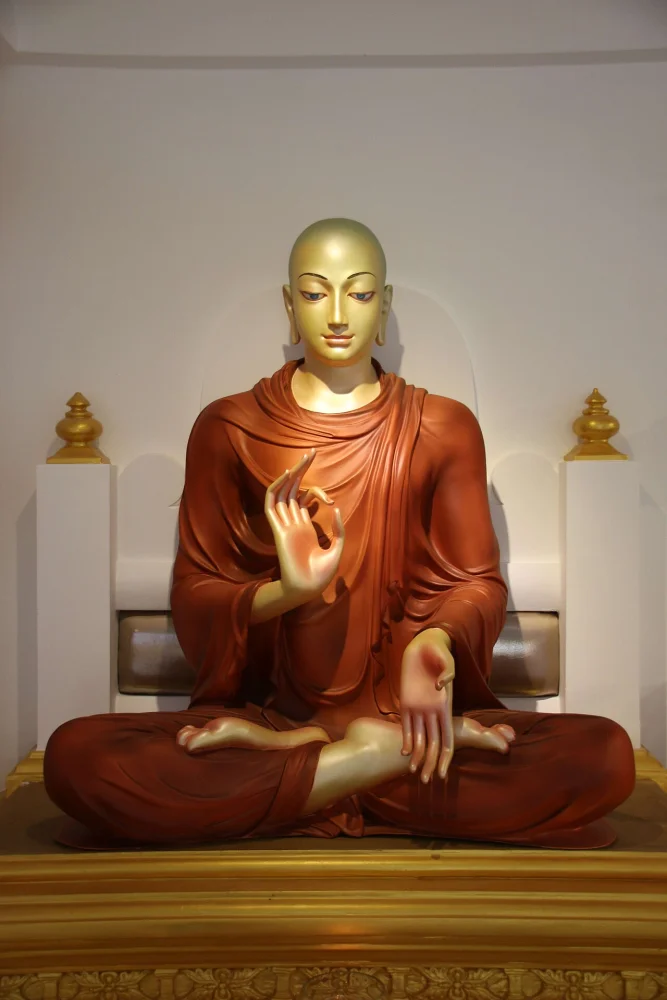
Śāriputra, known in Pali as Sāriputta, was one of Gautama Buddha’s two chief disciples and is especially revered for his wisdom. Buddhist texts portray him as an exceptional teacher who could explain the Dharma with clarity and care. His partnership with Mahāmaudgalyāyana, remembered as foremost in spiritual powers, became one of the defining relationships in accounts of the early Buddhist community.
A search for understanding
According to Buddhist tradition, Śāriputra was born Upatissa in the region of Magadha. His mother was called Sārī, and his name means “son of Sārī.” He and his close friend Kolita, later known as Mahāmaudgalyāyana, became wandering seekers and studied under the teacher Sañjaya.
The turning point in their search came when Upatissa met the monk Assaji, one of the Buddha’s early disciples. Impressed by Assaji’s calm bearing, he asked about the teaching he followed. Assaji gave a brief explanation of how phenomena arise through causes and cease when those causes end. Upatissa understood its significance and brought the teaching to Kolita, who also joined the Buddhist community.
The two friends became the Buddha’s principal disciples. Śāriputra was recognized as foremost among the monks in wisdom, while Mahāmaudgalyāyana was honored for his mastery of extraordinary spiritual abilities. The pair stood close to the Buddha and helped teach and guide the growing sangha.
A teacher of the Dharma
Early Buddhist texts present Śāriputra as analytical, patient and generous with younger monks. He is often shown explaining difficult ideas, answering questions and helping others develop their practice. Several discourses in the Pali canon feature him as a teacher in his own right, illustrating the importance of clear reasoning alongside meditation and ethical conduct.
His name also appears across a wide range of Buddhist traditions. In Sanskrit texts and Mahayana sutras he is called Śāriputra, and he sometimes serves as an interlocutor to whom the Buddha explains profound teachings. The “Heart Sutra,” for example, addresses him in its presentation of the nature of emptiness, though different Buddhist schools read the literary role in distinct ways.
Passing and enduring place
Buddhist biographies say Śāriputra died before the Buddha. In one account, he returned to his birthplace to teach his mother, then passed away peacefully. The details belong to religious tradition; no independently verifiable dates for his life survive.
Across Buddhist cultures, Śāriputra remains a model of discernment, learning and compassionate instruction. His image beside the Buddha and Mahāmaudgalyāyana recalls the paired strengths of insight and spiritual discipline. For practitioners and readers alike, his legacy is that profound wisdom can be made accessible through careful teaching.