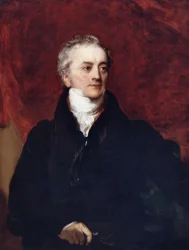
Sextus Empiricus
- A physician and philosophical inquirer
- The practice of suspending judgment
- Writing against dogmatism
- An afterlife in philosophy
Sextus Empiricus is the most important surviving voice of ancient Pyrrhonian skepticism. His writings preserve a tradition that urged people to keep investigating rather than rush to certainty. By laying out arguments on both sides of difficult questions, he described how a skeptic might suspend judgment and find a calmer way to live. Almost nothing is known about his personal life, but his books have shaped philosophical debates for centuries.
A physician and philosophical inquirer
Sextus probably lived in the second or third century CE, during the Roman Empire. The ancient record tells us little about where he was born or worked. His name and references in ancient sources connect him with medical practice, and he occasionally refers to himself as a physician. The epithet “Empiricus” is associated with an ancient medical school, but Sextus’s Pyrrhonian philosophy should not be confused with medical Empiricism. He explicitly considered the relationship between skeptical philosophy and rival approaches to medicine.
Pyrrhonism takes its name from Pyrrho of Elis, an earlier Greek philosopher. Sextus presented skepticism as an ongoing inquiry rather than a fixed doctrine. The skeptic does not declare that knowledge is impossible; instead, the skeptic examines competing arguments and refrains from affirming a conclusion when the evidence remains balanced.
The practice of suspending judgment
Sextus’s best-known work, “Outlines of Pyrrhonism,” explains how this practice works. When arguments seem equally persuasive on opposing sides, the skeptic suspends judgment, a state called “epochē.” Sextus describes tranquility, or “ataraxia,” as something that may follow when a person stops struggling to settle questions that cannot be resolved. This is not a promise of permanent peace, but a description of what the skeptic’s method can bring about.
Skeptics still live ordinary lives. Sextus says they follow appearances, bodily needs, social customs, laws, and the practical guidance of skills such as medicine. They can respond to what seems hot, cold, or painful without making a final claim about the ultimate nature of reality. This distinction allowed Pyrrhonists to act in daily life while remaining cautious about philosophical explanations.
Writing against dogmatism
Sextus also wrote a larger set of arguments often grouped under the title “Against the Mathematicians.” The word “mathematicians” in this ancient context refers broadly to teachers and specialists in fields such as grammar, rhetoric, geometry, arithmetic, astronomy, and music. He examined claims made by these disciplines, as well as arguments concerning logic, nature, and ethics. His goal was not simply to replace one theory with another, but to expose how difficult it can be to establish certainty.
These works are unusually valuable because so much of ancient skeptical philosophy has been lost. Sextus gives later readers access to arguments and debates that might otherwise be known only through fragments or opponents’ accounts.
An afterlife in philosophy
Sextus’s texts were rediscovered and translated in Renaissance Europe, helping revive skepticism in early modern philosophy. His arguments influenced writers who questioned the reach of human reason and the certainty of inherited beliefs. The questions he raised remain familiar: how should people respond when evidence conflicts, what counts as knowledge, and whether life requires firm answers to every question.
Sextus’s biography remains mostly unwritten because history preserved his ideas far better than details about his life. His lasting importance comes from presenting skepticism as a disciplined habit of inquiry, one that keeps thought open while making room for ordinary action.