Sasha Rodoy
 Great Britain
- Biography of Sasha Rodoy
- A Costly Mistake
- Fighting for Justice
- Lack of Regulation
- Limited Evidence and the Importance of Awareness
- Advocacy and the Push for Regulation
- Laser Eye Correction Procedure
Biography of Sasha Rodoy
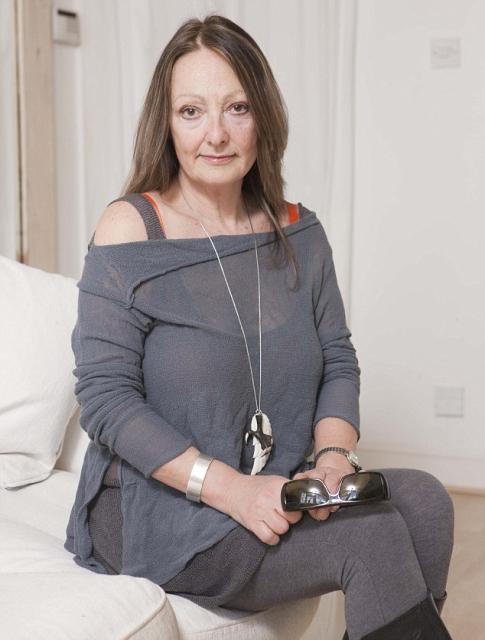
Sasha Rodoy, a former fashion designer and British national, has become an outspoken advocate against the laser industry after a disastrous experience with laser eye surgery in 2011. Now 57 years old and residing in London, Rodoy deeply regrets falling for the tempting offer to correct her vision for a mere £2000. She now actively fights for transparency and regulation in the laser surgery sector.

A Costly Mistake
In reality, Sasha's vision could have easily been corrected with glasses or contact lenses. Her prescription was -4.25 diopters in one eye and -4.0 in the other. "I agreed to the surgery not because I wanted the procedure itself," she admits. "I did it simply to save money on glasses." However, today Rodoy not only relies on glasses for distance vision but also for near vision. She has become a victim of the dangerous side effects of laser surgery, including dry eye syndrome and loss of depth perception. She is also troubled by the appearance of halos around light sources in the evening.
Fighting for Justice
Rodoy was able to settle her claims outside of court, although the compensation amount remains unknown. In 2012, she founded the website "My Beautiful Eyes" to support other victims of laser surgery. According to her, she has encountered thousands of people with similar stories. Approximately 100,000 people in the UK undergo laser eye surgery each year, with around 75% of operations performed by companies such as Optical Express, Optimax, and Ultralase. The remaining market share is divided among small private clinics and some hospitals. Rodoy became one of these 100,000 patients who signed up for what she now describes as "completely unregulated" eye surgery.
Lack of Regulation
There is not only a lack of independent control monitoring the results of companies or individual surgeons, but there are also no established standards for mandatory qualifications to perform the procedure. Any British doctor registered with the General Medical Council (GMC) gains access to performing laser surgery. Many people underestimate the potential risks, as heavily marketed techniques, even in ordinary supermarkets, distort the seriousness and dangers of eye surgery. Professor David Gartry, a consultant ophthalmic surgeon from Moorfields Eye Hospital, warns that people begin to think that getting laser correction is as simple as getting a dental filling. Many are enticed by low prices, ignoring the far-reaching consequences.
Limited Evidence and the Importance of Awareness
Ironically, there is surprisingly little evidence that the effects of the procedure are long-lasting, according to the National Institute for Health and Care Excellence (NICE). However, NICE concludes that refractive eye surgery is "safe and effective" if doctors ensure that patients are fully informed about the advantages and potential risks. Sasha Rodoy claims to have encountered only a handful of patients who proactively assessed the qualification level of the specialist and the level of risks. However, this did not protect them from regret and a life filled with pain. In some cases, British individuals seeking help did not even know who would be performing their surgery. Some never fully understood or consented to the implications of the eye surgery.
Advocacy and the Push for Regulation
Increasingly, experts advise considering laser correction only when it is the last resort to prevent blindness. While dirty glasses can be cleaned and contact lenses removed, it is impossible to "replace" eyes that have undergone surgery. Recently, a meeting between Health Minister Daniel Poulter and Member of Parliament John McDonnell, who is pressuring Parliament to regulate the intricacies of vision correction procedures, was planned for the third time but canceled last minute. McDonnell believes that all practitioners in this field must possess the appropriate qualifications and regularly publish information about their results.
The Department of Health's spokesperson said, "It is essential that refractive eye surgery is properly carried out by qualified specialists. As part of our wider review of cosmetic surgery, we are working with the GMC and the Royal College of Surgeons of England to ensure tighter controls in this area."
Laser Eye Correction Procedure
Laser eye correction typically takes 20 minutes for both eyes. The Royal College of Ophthalmologists in the UK states that it can correct myopia ranging from -1.0 to -9.0 and hyperopia from +1.0 to +4.0. The process involves removing a microscopic layer of tissue to change the shape of the cornea's front surface. One of the most common methods for treating myopia is LASIK. A small flap, thinner than a human hair, is lifted mechanically or with a rapidly pulsing femtosecond laser. Then, another type of laser reshapes the cornea by "smoothing" or vaporizing corneal cells. The epithelial layer is then repositioned. Most individuals can return to work the next day.
Another technique, LASEK, is typically performed when the cornea is too thin for LASIK. A solution containing alcohol is used to detach a piece of the epithelium from the cornea. After the laser treatment, similar to the LASEK procedure, the epithelium is repositioned. This operation is less comfortable, and recovery takes longer. Patients must wear soft contact lenses for up to five days after the procedure.