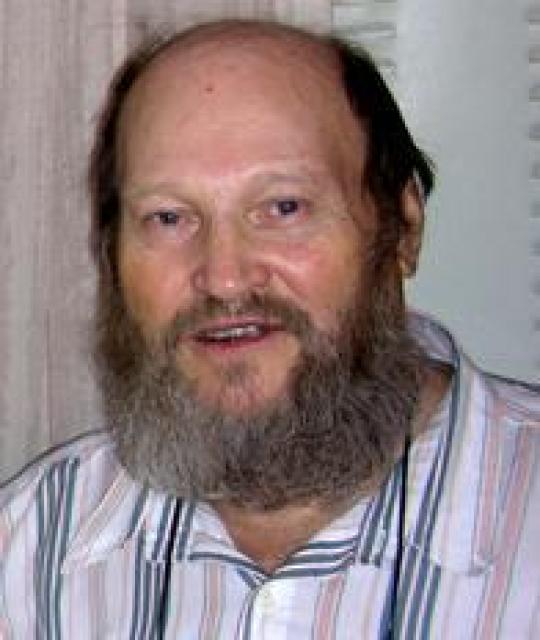
Saveliy Dudakov
 Israel
Saveliy Dudakov was an Israeli philologist and historian whose work explored the intertwined histories of Russian literature, Jewish life and antisemitism. A scholar with a wide literary range, he examined how stereotypes about Jews were formed and repeated in Russian writing and public thought, and how those ideas shaped both culture and politics.
Early life and education
Saveliy Yuryevich Dudakov was born on 28 July 1939 in Leningrad, then part of the Soviet Union. He grew up during a turbulent period: as a young child, he experienced the siege of Leningrad during the Second World War. He later studied at the A. I. Herzen Leningrad Pedagogical Institute, graduating from its philology faculty in 1964.
Dudakov’s training in literature and language informed a career that crossed disciplinary boundaries. He became interested in how historical narratives and literary images could influence public attitudes, especially the recurring ways Jewish people were depicted in Russian culture. From the early 1960s, he also took part in the Soviet Zionist movement, at a time when Jewish cultural and national expression faced official restrictions.
Move to Israel and academic work
In 1971 Dudakov emigrated to Israel. Five years later he began working at the Institute of Eastern European Jewry at the Hebrew University of Jerusalem, where his research focused on the history of Jews in Russia and the literary and political forms of antisemitism. In 1991 he completed a doctorate in history at the university, with a dissertation on antisemitic literature in Russia and *The Protocols of the Elders of Zion*.
Dudakov approached the subject as a historian of ideas as well as a literary scholar. Rather than treating prejudice as an isolated set of opinions, he traced its development through fiction, journalism and political writing. His work examined how inherited religious motifs, conspiratorial narratives and political anxieties were adapted by writers across different periods.
Books and historical interests
His 1993 book *The History of a Myth: Essays on Russian Literature of the Nineteenth and Twentieth Centuries* studied the literary history behind antisemitic myths and the circumstances that helped them persist. In *Paradoxes and Caprices of Philosemitism and Antisemitism in Russia* (2000), he expanded the inquiry to include changing attitudes toward Jews, from hostility to idealization and back again. Other books included *Lenin as Messiah* and *Studies in Love and Hate*.
Dudakov’s interests reached beyond literary history. He wrote about Peter Shafirov, an eighteenth-century diplomat and statesman of Jewish origin, and explored the history of chess in *Caissa and Wotan*. He was also a strong chess player, earning the Soviet title of Master of Sport. This combination of scholarship and competitive play reflected his broad curiosity and analytical temperament.
Legacy
Dudakov received the Leah Goldberg Literary Prize and the Professor Joseph Klausner Prize for history. He died on 17 October 2017, aged 78. His books remain a distinctive contribution to the study of Russian Jewish history because they connect literature with the social life of ideas. By tracing the forms and afterlives of cultural myths, he showed how stories about a minority could become part of a society’s broader political imagination.




