Saymon Niukom
 USA
USA- Early Life and Education
- Astronomical Career
- Naval Observatory and American Ephemeris Office
- Celestial Mechanics and Astronomical Constants
- Lunar Theory, Stellar Catalog, and Speed of Light
- Legacy and Honors
Early Life and Education
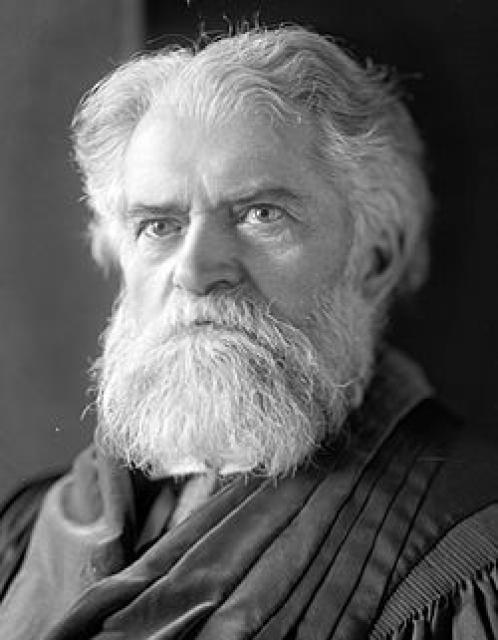
Simon Newcomb was born on March 12, 1835, in Wallace, Nova Scotia, Canada. Exhibiting remarkable mathematical abilities from a young age, he mastered school arithmetic, including square root extraction, by age seven with the guidance of his father, a schoolteacher. Although he lacked formal schooling, Newcomb pursued self-education and apprenticed with a physician for two years.
Astronomical Career
In 1853, Newcomb moved to Maryland and immersed himself in scientific studies at libraries in Washington, D.C. He developed a particular affinity for astronomy and mathematics, especially the American Ephemeris and Nautical Almanac, which provided navigational information based on astronomical observations. In 1857, he became a computer at the Nautical Almanac Office (later the American Ephemeris Office) in Cambridge, Massachusetts. Concurrently, he attended the Lawrence Scientific School at Harvard University and graduated in 1858.
Naval Observatory and American Ephemeris Office
From 1861 to 1877, Newcomb worked at the Naval Observatory in Washington, D.C., as a mathematician and professor at the Naval Academy. He spent over a decade observing celestial bodies with meridian instruments and two years using the new 26-inch refractor. From 1877 to 1897, Newcomb directed the American Ephemeris Office. In 1897, upon reaching retirement age as a captain, he was exceptionally promoted to rear admiral.
Celestial Mechanics and Astronomical Constants
Newcomb's scientific contributions centered on celestial mechanics, astrometry, and navigational astronomy. He conducted groundbreaking studies on planetary motion, developing a theory for Neptune's movement. By recalculating and refining astronomical constants pertaining to Earth and planetary motion, he created highly accurate tables for the four inner planets, utilizing observations collected from 1750 to 1890. He also oversaw the computation of tables for Uranus and Neptune. Newcomb's astronomical constants remained foundational throughout the 20th century, underpinning theoretical astronomy and astrometry research.
Lunar Theory, Stellar Catalog, and Speed of Light
Newcomb made significant advancements in lunar theory, compiling and analyzing lunar observations from ancient times. His data formed the basis for E.W. Brown's refined lunar theory and tables published in 1919. He constructed a fundamental star catalog based on observations from 21 observatories, listing 1,597 reference stars. In collaboration with A. Michelson, Newcomb determined the speed of light using the Fizeau method. Additionally, he provided an explanation for the discrepancy between the Chandler wobble period and the period calculated by L. Euler.
Legacy and Honors
Simon Newcomb's scientific legacy comprises over 500 publications. He was an accomplished science popularizer, authoring books such as "Astronomy for Everybody" and "The Stars." He was elected a member of prestigious institutions, including the Royal Society of London, the Paris Academy of Sciences, and the St. Petersburg Academy of Sciences. Newcomb received numerous awards, including the Gold Medal of the Royal Astronomical Society, the James Craig Watson Medal, and the Bruce Medal. His name graces lunar and Martian craters, a testament to his enduring contributions to astronomy.