 |
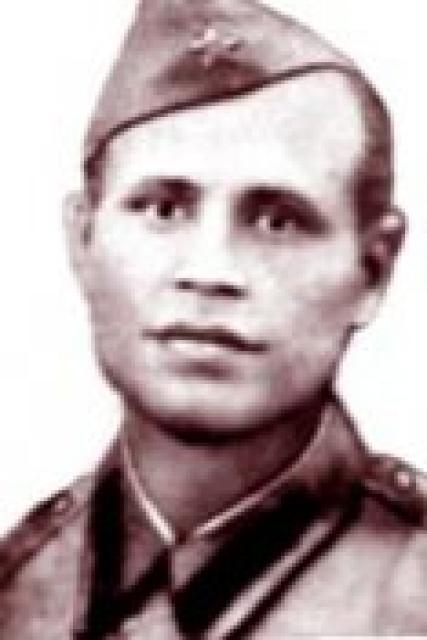
Semen BaykovCommander of the engineer platoon of the 50th separate motorized engineering battalion, Hero of the Soviet Union
Date of Birth: 01.01.1914
|
Content:
Early Life and Military Service
Semyon Grigoryevich Baikov was born in 1914 in the village of Kandiyevka in the Penza Governorate (now the Bashmakovsky District of the Penza region) to a peasant family. After completing secondary school, he worked on a collective farm until joining the Red Army in 1935. Baikov participated in the Great Patriotic War from its onset in June 1941.
Heroic Act
As a junior lieutenant and platoon commander in the 50th separate motorized engineer battalion of the 1st Mechanized Corps, 11th Army, Northwestern Front, Baikov led a group of sappers tasked with mining the Riga Bridge over the Velikaya River in Pskov. After ensuring the passage of retreating units, Baikov was instructed to detonate the bridge. However, a Soviet artillery division remained on the opposite bank.
With a damaged wire preventing remote detonation, Baikov and several sappers approached the bridge's girders and detonated it using incendiary tubes. Baikov, responsible for the section closest to the enemy, perished in the explosion.
Posthumous Recognition and Correction
For his bravery and selflessness, Baikov was posthumously awarded the title of Hero of the Soviet Union on March 16, 1942. However, it was later discovered that five of the sappers who had been presumed killed - Junior Sergeant Panov, Privates Alekseev, Anashchenkov, Nikitin, Kholyavin, and Khomlyashov - had survived despite sustaining wounds and concussions.